Developing story update (June 26, 2026, 07:49 UTC):
A new development reveals Kalshi, one of the prediction market platforms at the center of the CFTC’s lawsuit against Kentucky, is reportedly targeting a $40 billion valuation.
This comes weeks after the platform secured a $1 billion raise, underscoring the significant financial stakes and rapid growth potential within the prediction market sector.
Traders should note this highlights the substantial economic interests involved in the ongoing jurisdictional battle, adding another layer to the regulatory landscape for crypto-adjacent financial products.
What to watch now: Watch for further details on Kalshi's valuation efforts and any official responses from regulators regarding the financial scale of prediction markets.
Developing story update (June 26, 2026, 06:01 UTC):
The CFTC’s lawsuit against Kentucky, aimed at protecting prediction markets like Kalshi and Polymarket, was filed earlier this week. Reports indicate the filing occurred on Monday or Tuesday. This clarifies the timing of the federal action against the state’s regulators.
What to watch now: Monitor for any initial responses or procedural developments from Kentucky following the CFTC's filing.
Developing story update (June 26, 2026, 04:35 UTC):
A new development indicates Kentucky’s Attorney General has also filed civil actions against sweepstakes operator VGW, in addition to Kalshi and Polymarket.
This suggests a broader state-level enforcement strategy targeting various online operators, not solely prediction markets.
From a smart money perspective, while this expands the scope of state actions, it remains a localized regulatory dispute that does not directly impact the broader crypto market structure or liquidity.
What to watch now: Monitor for further expansion of state-level enforcement actions against online operators beyond prediction markets.
Developing story update (June 26, 2026, 02:24 UTC):
Update: As the federal jurisdiction fight plays out, one of the platforms at the center of it appears to be scaling up fast. Kalshi is reportedly seeking a valuation near $40 billion, coming only weeks after a reported $1 billion capital raise.
For traders, this signals that capital is still flowing into the prediction market sector even with the legal uncertainty unresolved. A larger, better funded platform has more room to fight enforcement actions in court, which could shape how this regulatory question settles over time.
What to watch now: Whether Kalshi's reported $40B raise closes and how it affects the platform's ability to contest state-level enforcement.
Developing story update (June 26, 2026, 00:36 UTC):
Update: This Kentucky case is not isolated. The CFTC has now taken nine states to court over who holds jurisdiction on prediction markets, which frames Kentucky as part of a wider federal push rather than a one-off skirmish.
For traders the takeaway is unchanged. This remains a niche regulatory thread that is unlikely to be a primary driver of BTC or ETH price action, though a broadening federal-versus-state fight is worth tracking for the event contract space.
What to watch now: Whether the count of states fighting the CFTC keeps rising and any federal court ruling that sets precedent.
Developing story update (June 25, 2026, 23:09 UTC):
An important update reveals Kentucky is not alone in its regulatory stance against prediction markets. It is now confirmed that 19 states are actively engaged in litigation concerning these platforms.
This broader context suggests an escalating, multi-state regulatory environment for prediction markets, indicating a wider trend of state-level scrutiny.
What to watch now: Monitor further developments in the multi-state regulatory actions against prediction market platforms.
Listen: the 2-minute breakdown
By the ParadiseTeam · Updated June 2026
Market briefing: The CFTC has sued Kentucky to protect Kalshi and Polymarket, opening a federal versus state fight over prediction markets. Bitcoin holds near $59,800 while professionals quietly reaccumulate.
- The CFTC sued Kentucky to block state action against Kalshi and Polymarket
- Kentucky alleged both ran unlicensed sportsbooks, also targeting Coinbase, Robinhood and Webull
- No direct BTC catalyst, but a long-term push for federal crypto regulatory clarity
The CFTC sued Kentucky to shield Kalshi and Polymarket, turning prediction markets into a federal versus state showdown. So who really benefits when Washington steps in?
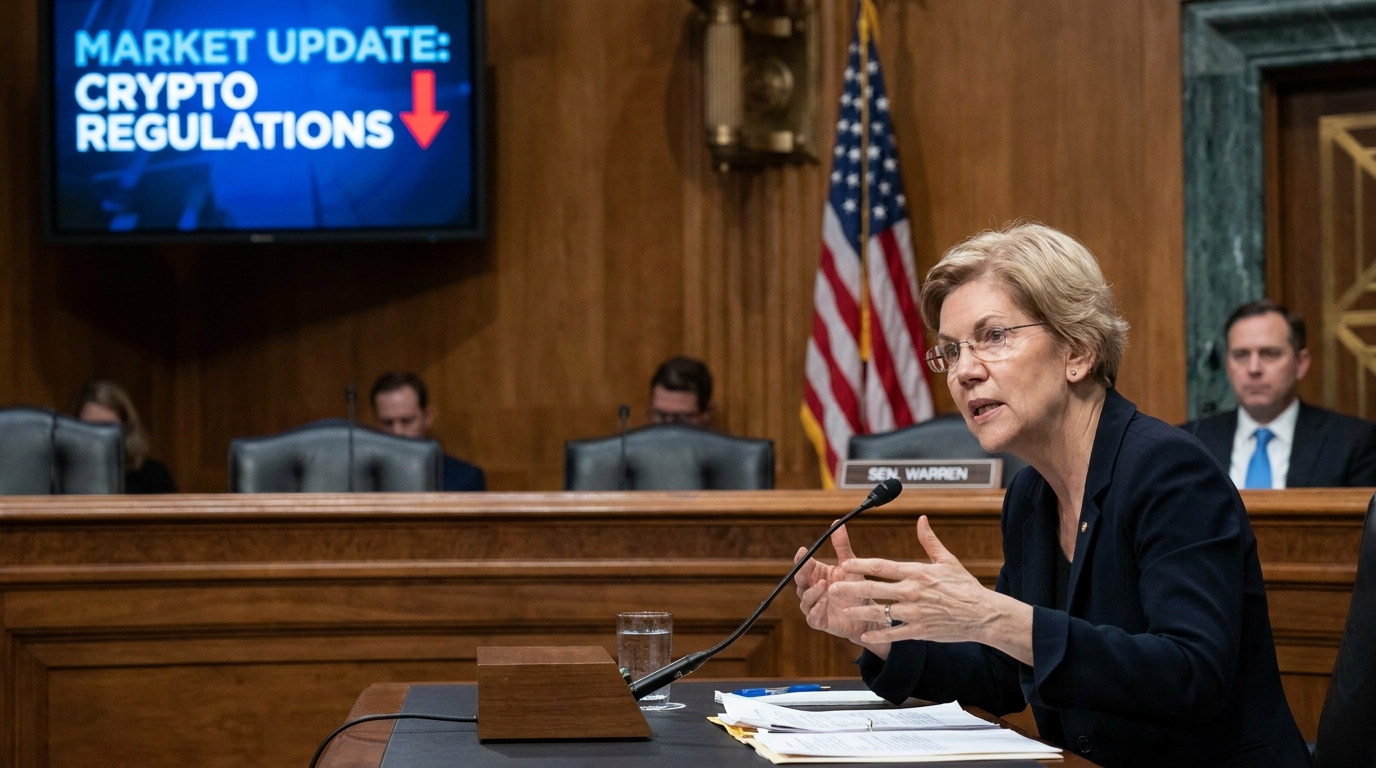
Washington just drew a hard line. The CFTC has sued Kentucky in federal court, moving to block the state's enforcement against prediction market platforms Kalshi and Polymarket. The trigger was clear. On June 17, Kentucky Attorney General Russell Coleman filed civil actions against both platforms. He alleged they were running unlicensed sportsbooks under Kentucky gambling law, doing business without a state gaming license or following state rules. The reach went wider. Kentucky's actions also named Kalshi partners Coinbase, Robinhood and Webull. That is the part traders should notice. This is no longer a niche fight about event contracts. It now pulls in three platforms that millions of crypto users touch every week. The CFTC's response is a jurisdictional claim. It argues these markets are regulated under federal law, so a state cannot override that authority. The politics make it sharper. Kentucky is the first Republican-led state to face such a suit over prediction markets. Coleman is a Republican, while Governor Andy Beshear is a Democrat. So this is not a simple party divide. It is a structural battle over who controls novel financial products in the United States. For crypto, the question is bigger than Kalshi or Polymarket. It is whether federal clarity finally starts to harden, and what that means for capital that has been waiting on the sidelines for rules it can trust.
Why CFTC vs Kentucky Matters for Crypto
Regulation is plumbing. It decides where capital can flow and how freely. The CFTC versus Kentucky fight matters because it tests one core question. Who governs new digital-adjacent markets in the United States. When a federal regulator sues a state to protect platforms it oversees, it is asserting primary authority. That reduces the fog. And fog is what keeps large allocators cautious. Big money does not fear rules. It fears uncertainty. A patchwork of fifty state interpretations is a tax on participation. A single federal framework is an invitation. This case sits inside a wider macro trend. US authorities are slowly defining the legal map for crypto and crypto-adjacent products. Every clarifying step lowers the perceived risk premium on the asset class. That does not move price today. It shifts the long-run baseline. The transmission runs like this. Clearer federal jurisdiction lowers compliance risk. Lower risk invites institutional capital. Deeper institutional capital steadies liquidity. Steadier liquidity dampens the violent swings retail dreads. So while no Bitcoin candle reacts to this filing, the structural backdrop quietly improves. The platforms named, Coinbase, Robinhood and Webull, are the rails between traditional finance and crypto. Protecting their federal standing protects those rails. That is why a courtroom in Kentucky reaches further than it looks.
Market Impact of CFTC vs Kentucky
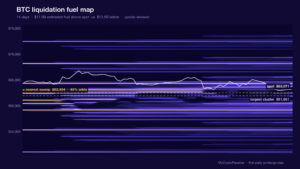
Let us be honest about the chain. This lawsuit is not a liquidity event. It will not flush stops or spark a rally on its own. Bitcoin trades near $59,817, down about 1.9 percent on the day. Ethereum sits near $1,571, down about 2.8 percent. Both are consolidating, and this news does not change that tape. The real liquidity story is happening underneath the headline. Recent sessions saw heavy long liquidations, a reported $681 million wiped out. That is the cascade that matters now. Leverage got cleared. When over-positioned longs blow out, the market resets. Forced selling exhausts. Then the float gets lighter, and upside moves need less fuel. Bitcoin leads this process. ETH follows its lead, and alts amplify it later, both up and down. So the sequence is simple. BTC stabilizes first, ETH confirms, alts react last. The regulatory news layers on top as slow-burn support, not a spark. It strengthens the case that crypto rails keep maturing in the US. Smart money treats that as a tailwind for confidence, not a trade trigger. Retail often does the opposite. It reads any regulatory headline as danger and sells into weakness. That reaction, into a market that just cleared its leverage, is exactly the kind of move professionals like to absorb.
What to Watch Next After Prediction Market Lawsuit
Watch structure, not headlines. The lawsuit is context. The chart is the signal. The leverage flush is the setup the ParadiseTeam respects most right now. After a $681 million long liquidation, the question is whether buyers step in or sellers press the advantage. Confirmation would come on the daily timeframe. A daily candle close above $63,000 would tell us the reaccumulation is gaining traction. Pair that with the daily RSI reclaiming its trendline and breaking above two prior highs. On the lower timeframe, we want the 4-hour MACD histogram printing three or more higher closing bars, then a bullish cross. The 4-hour MACD is already attempting a bullish divergence, a lower price low against a higher histogram low. That is early, but it is the kind of footprint smart money leaves while accumulating. The daily MACD shows no bullish divergence yet, though it has produced a bullish cross. Now the invalidation. A sustained daily close below $60,800 would weaken the bullish case and warn that the reaccumulation zone is failing. One caution sign is the daily Stochastic RSI attempting a bearish cross. So the map is clear. Above $63,000 builds the case. Below $60,800 breaks it. The regulatory backdrop does not change those lines. It only frames the patience required to let them resolve.
Insights for Traders on CFTC vs Kentucky
Here is how the ParadiseTeam reads it. We stay bullish, with continuation toward $79,000 as our medium-term target on the daily timeframe. The path runs through milestones, not in a straight line. The intermediate objective sits near $70,000. Before that, $63,000 is the immediate resistance we need reclaimed as confirmation. Below, $60,800 is the key support and our line of invalidation. With Bitcoin near $59,817, price is testing the lower edge of this zone, which is exactly where conviction gets tested. Our read on positioning is straightforward. Professionals are in a reaccumulation phase, leaning long because the risk to reward favors the upside here. The recent $681 million in long liquidations looks like retail capitulation, not the start of a trend reversal. Poor risk management forced weak hands out. That is often the liquidity smart money waits for. So our base case is a hold and recovery from this support band, then a daily close back above $63,000 to validate the move. The bullish trigger is that reclaim plus the 4-hour MACD turning up. The plan is invalidated on a decisive daily close below $60,800. This is a probability read, not a promise. Manage risk on every entry. The regulatory news supports the long-term thesis. The chart decides the trade.
For exact entries, targets, and stop losses with full risk management, that is what the ParadiseFamilyVIP is for. New to reading these moves? Start with our crypto trading strategies guide.
ParadiseTeam is monitoring the market situation closely, and we are taking these developments into consideration while building our trading tactics inside ParadiseFamilyVIP.
Crypto trading involves substantial risk. Prices are volatile and you can lose money. This article is educational and is not financial advice. Past performance does not guarantee future results.