Listen: the 2-minute breakdown
Bearish for crypto
Market briefing: Bitcoin trades near 59,350 after sliding to 58,000, its weakest level of 2026. Hot PCE data hardened the Fed and ETF money kept leaving for a sixth day. Our read stays cautious below the macro reaccumulation zone.
- Bitcoin fell as low as $58,121, its lowest since September 2024 and weakest in 2026.
- Hotter than expected May PCE data reinforced the Fed's hawkish stance and dimmed rate cut hopes.
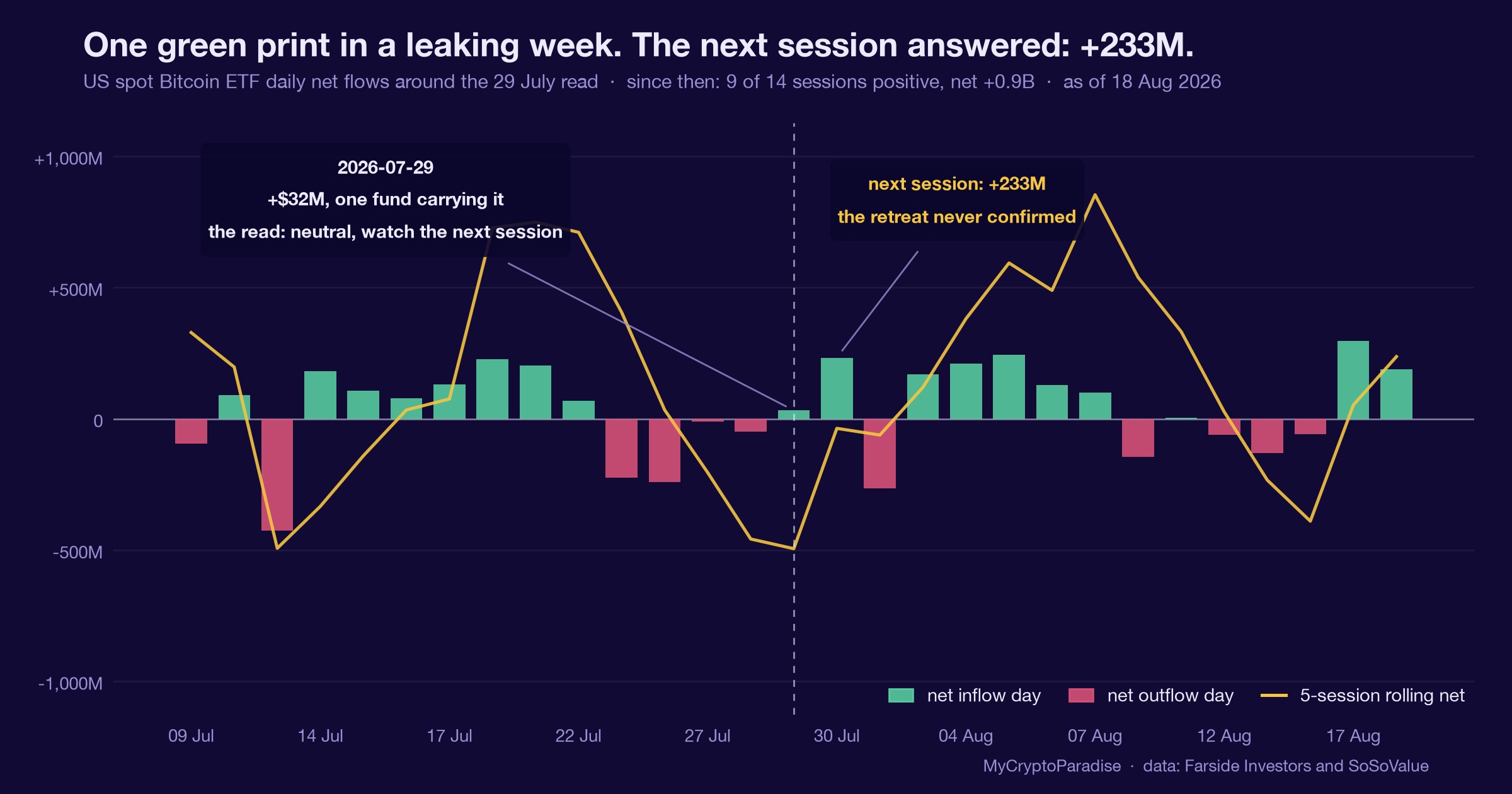
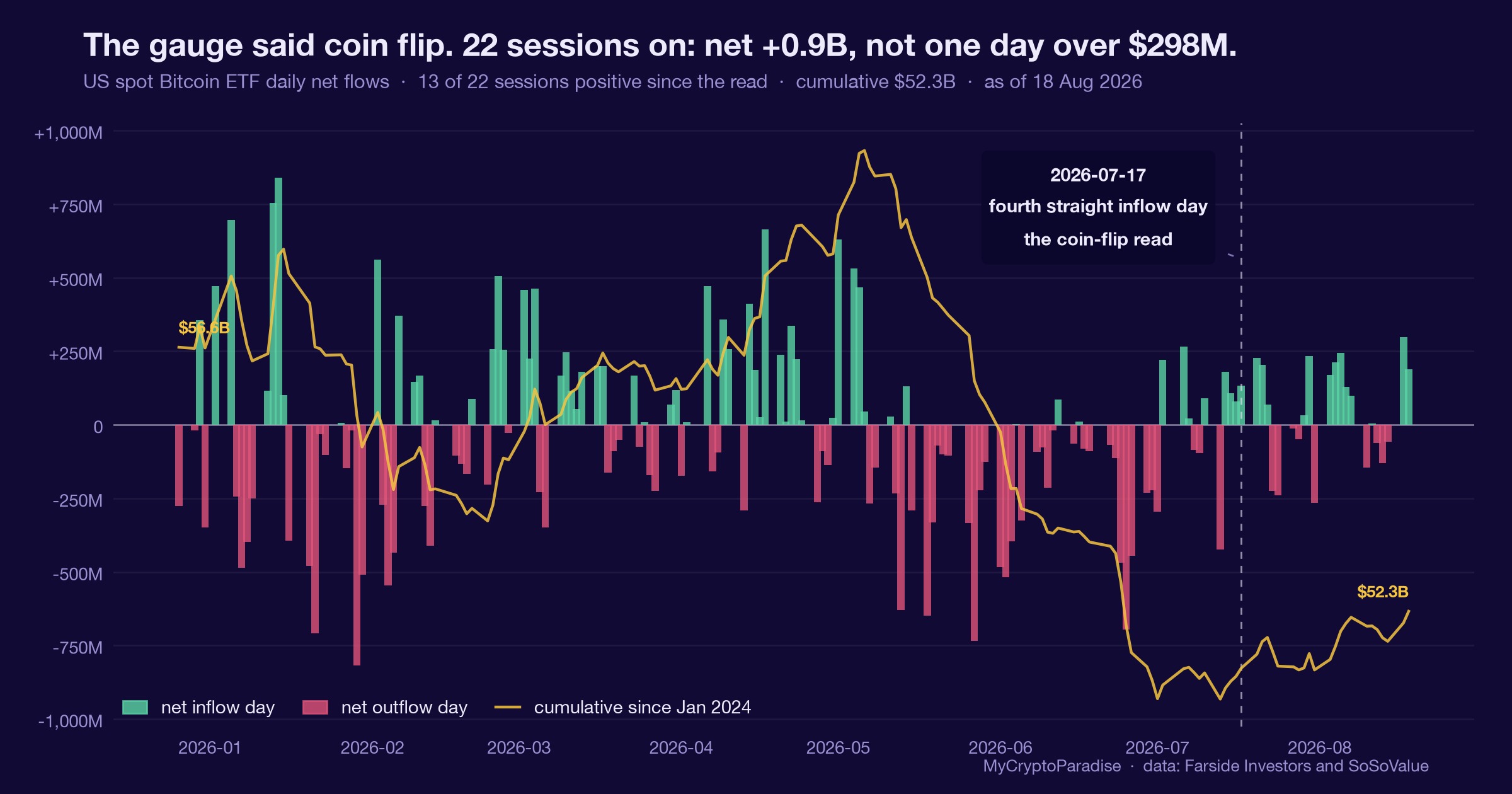
- Spot BTC ETF outflows extended to a sixth straight day into a major quarterly options expiry.
Bitcoin's $58K plunge came as hot PCE data crushed rate cut hopes and ETF money kept leaving. So is the cycle bottom really in, or is the worst flush still ahead?
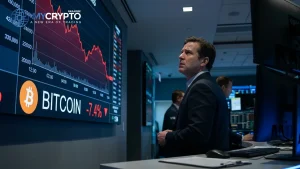
Bitcoin's $58K plunge defined the week. On June 25, 2026, price slid to a low of $58,121, its weakest level since September 2024 and the lowest of the entire year. As we write, Bitcoin trades near $59,350, down about three percent over twenty four hours and still soft on the hour. The trigger was clear. May PCE inflation printed hotter than expected. That single number reinforced the Federal Reserve's hawkish stance and quietly removed near term rate cuts from the table. Risk assets felt it instantly. Spot Bitcoin ETFs saw outflows extend to a sixth consecutive day. The selling landed right into a major quarterly options expiry, where positioning is dense and stops cluster. The result was forced. Roughly $1.26 billion in crypto liquidations cleared the board, with leveraged longs hit hardest. Around $1.6 billion in long positions still sit at risk if pressure continues. Altcoins followed Bitcoin lower, as they almost always do when liquidity tightens at the top of the stack. The crowd reading is split. Some call this the cycle bottom. Others see a deeper flush ahead. That disagreement matters, because it tells you who is trapped. Retail participation already sits near a six year low. The people still pressing buttons are not the public. They are leveraged accounts and institutions reacting to macro, not patient spot buyers stepping in with conviction.
How one inflation print tightened liquidity
Bitcoin's $58K plunge is really a macro story wearing a crypto costume. Start with the driver. Hotter than expected PCE tells the Fed that inflation is sticky. A sticky read keeps policy tight. Tight policy means higher rates for longer and less cheap money chasing risk. That is the transmission belt. It runs from one data point to every leveraged position on the screen. When rate cut hopes fade, the discount rate on every speculative asset rises in traders' heads. Bitcoin sits at the far, volatile end of that curve. So it moves first and it moves most. Now add the plumbing. ETF outflows for a sixth straight day are not noise. They are a steady drain of spot demand at the exact moment macro turns cold. Less passive buying meets more forced selling. The timing into a quarterly options expiry made it worse, because dealers hedge into expiry and that hedging amplifies the move both ways. This is why the $1.26 billion liquidation cascade happened so fast. It was not new fundamental damage to Bitcoin. It was leverage meeting thin liquidity meeting a hawkish surprise. Understand that and the panic looks mechanical, not existential. The asset did not break. The funding did. That distinction is the difference between reacting to a headline and reading the market underneath it.
Why the cascade ran from BTC to alts
Watch how the damage traveled. Bitcoin led, because Bitcoin is the liquidity anchor of this market. When $1.26 billion in positions liquidated, the bid for everything thinned at once. Longs that financed altcoin bets got margin called on their Bitcoin first. That is the mechanism behind broad altcoin weakness during the $58K plunge. Capital does not rotate gracefully in a flush. It exits in a line, and the line starts at the top. Ethereum sat in the middle of that line. It tends to hold better than small caps but worse than Bitcoin when macro fear leads. Alts sat at the bottom, where liquidity is thinnest and stops are easiest to hunt. Here is our edge read. The $1.6 billion in longs still at risk marks where the next pain lives. Those stops sit just below recent lows. Price gravitates toward resting liquidity, especially into and just after an options expiry. So a sweep of that pool is more likely than a clean V bounce from here. Retail near a six year low means the derivatives crowd, not patient spot buyers, set the short term tape. That crowd is reactive and over leveraged. It chases bounces and sells lows. Smart money does the opposite. It waits for that liquidity to clear, then buys spot quietly while the screen still looks broken. The flow, not the headline, tells you who is in control.
Signals that confirm or break this read
Watch the data before the price. The next inflation and Fed signals matter most, because PCE is what started the $58K plunge. A cooler follow up print would ease the hawkish pressure and let oversold price relieve higher. A second hot read would confirm the tighter for longer path and keep risk heavy. Watch the ETF flows daily. A seventh and eighth day of outflows says spot demand is still absent and any bounce is borrowed time. The first real day of net inflows would be an early sign that patient money is stepping back in. Watch leverage. That $1.6 billion in longs at risk is the trigger zone. If those stops get swept and price reclaims the level quickly, the flush did its job and the structure firms. If price grinds lower without a sharp reclaim, the cascade is not finished. We also watch participation. Volume that shows higher highs on spot accumulation, not derivative churn, is the tell that smart money is buying. An index of institutional behavior staying red below zero for a sustained stretch would say the frustration phase is still running. The clean invalidation of the bearish near term case is simple. A decisive, high volume reclaim of broken levels on spot, with ETF inflows returning, would say the bottom claim has teeth. Until then, treat bounces as suspect.
Where the ParadiseTeam stands on $59K
Here is the ParadiseTeam read, applied to this exact plunge. At $59,350, Bitcoin sits above the zone we actually want to buy, not inside it. Our macro reaccumulation target is $55,000 to $44,000. This $58K low is progress toward it, not arrival. So we do not treat this print as the bottom. We treat it as the move that sets up the next two trades. First, the bounce. Oversold conditions and a stacked options expiry can spring a relief rally. We view strength toward the $73,000 moving average region, and the $79,000 CME gap and 786 Fib, as prime swing short territory, not a trend reversal. That is where trapped longs from this week try to exit and where patient sellers meet them. Second, the flush. We expect a final push lower into $55,000 to $44,000, driven by institutions forced to sell at a loss. Retail near a six year low cannot cushion that. Smart money absorbs spot supply there while the crowd capitulates. The confirmation we need is specific. We want an institutional index staying red below zero for a sustained stretch, then higher highs on spot accumulation volume inside that lower zone. That confluence, not a single green candle, signals the macro bottom. Until it prints, our bias stays cautious and short biased on bounces. Probabilities, not promises. Manage risk first, always.
For exact entries, targets, and stop losses with full risk management, that is what ParadiseFamilyVIP is for. New to reading these moves? Start with our crypto trading strategies guide.
ParadiseTeam is monitoring the market situation closely, and we are taking these developments into consideration while building our trading tactics inside ParadiseFamilyVIP.
Crypto trading involves substantial risk. Prices are volatile and you can lose money. This article is educational and is not financial advice. Past performance does not guarantee future results.