Developing story update (June 27, 2026, 06:32 UTC):
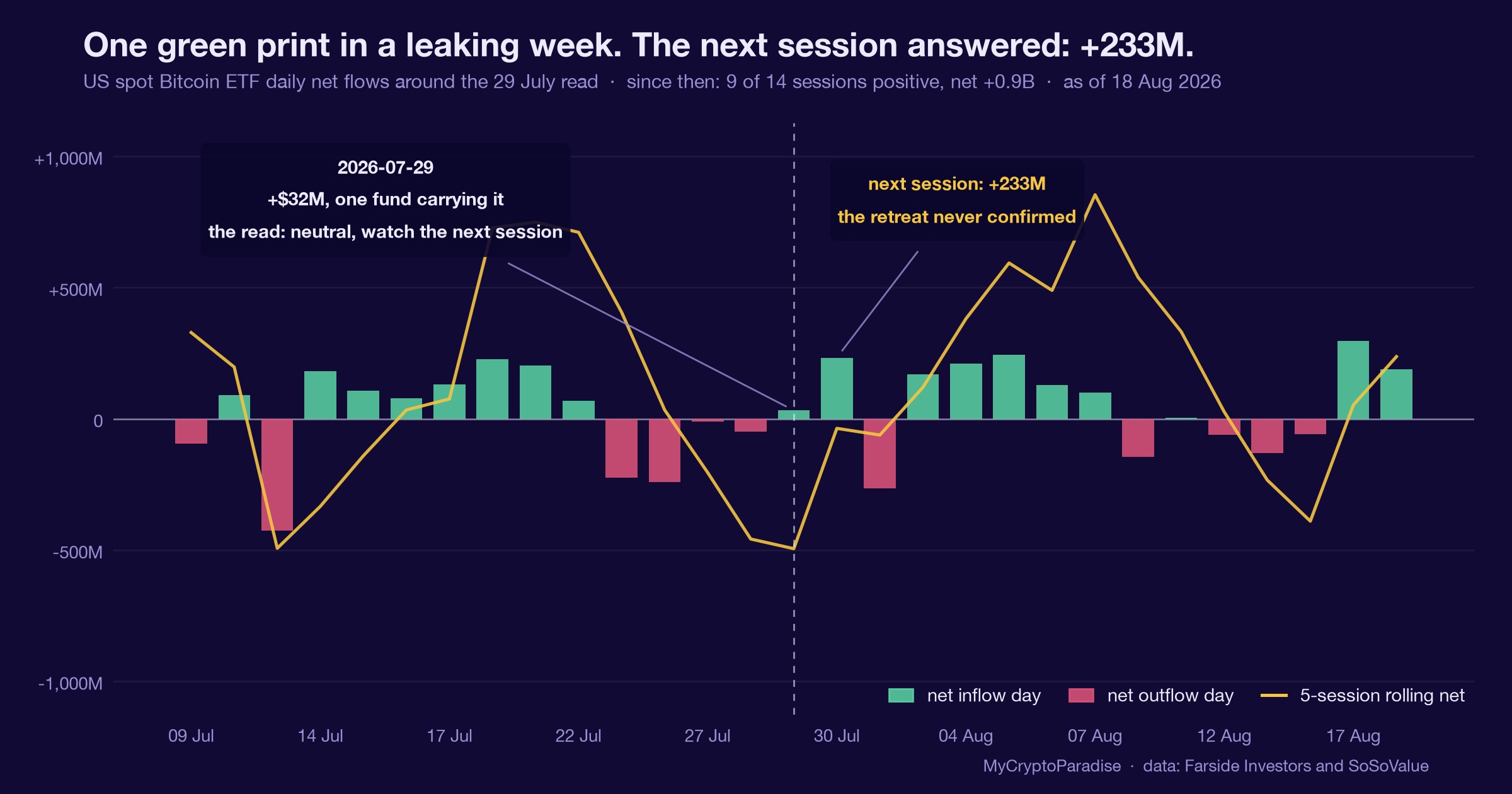
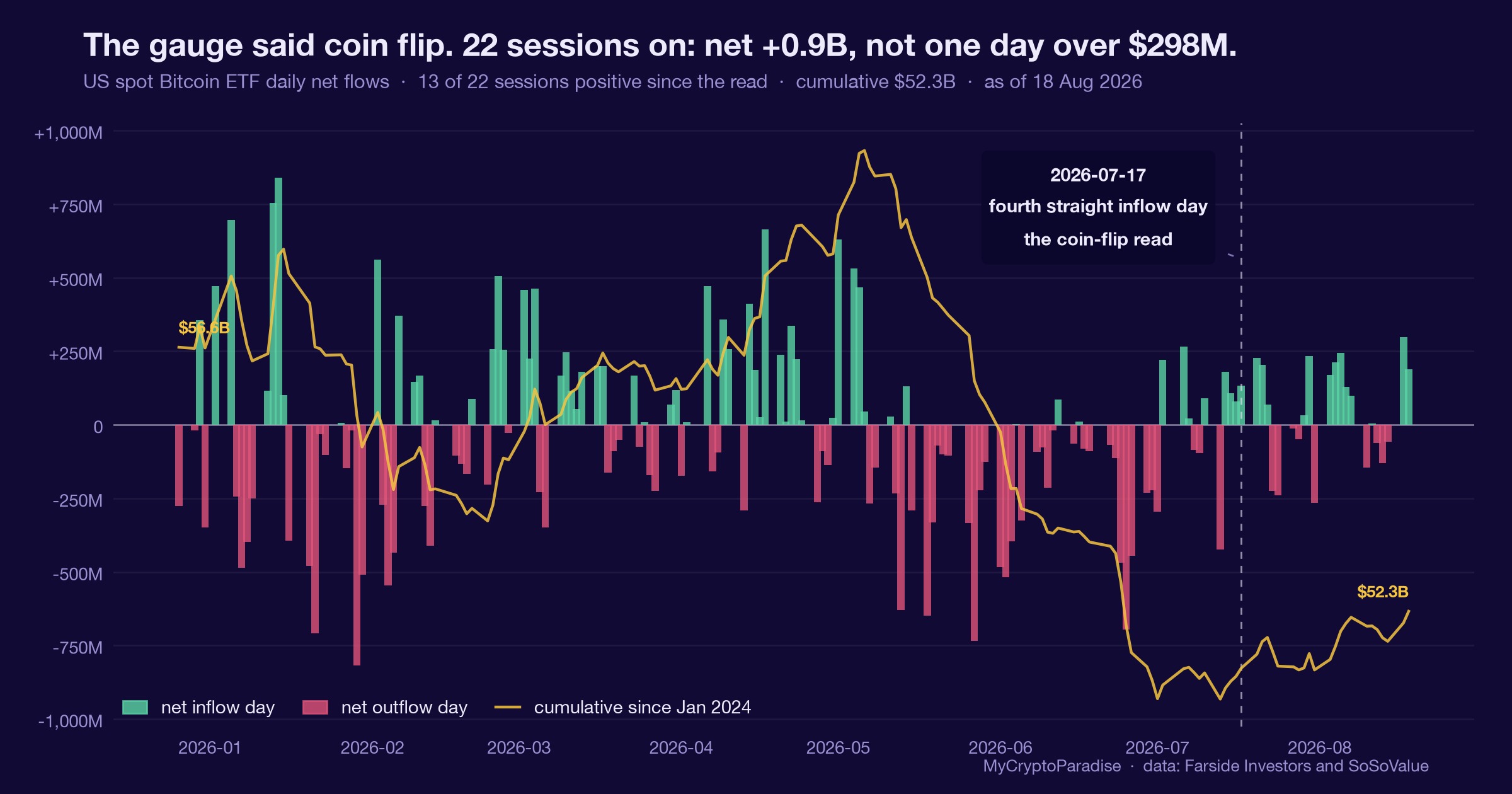
The outflow run has now stretched to a seventh straight day. Spot Bitcoin ETFs shed another $444.5 million on June 26, with BlackRock’s IBIT acting as the sole driver of the day’s net redemptions.
For traders, the signal is that institutional selling has not exhausted itself yet. A streak led this consistently by one large fund suggests distribution is still underway rather than complete, which keeps the probability of further downside pressure elevated until flows stabilize.
What to watch now: Watch whether daily ETF flows turn positive or print a smaller redemption, which would be the first sign the selling streak is fading.
Developing story update (June 27, 2026, 00:45 UTC):
Update: the outflow run has now stretched to a sixth straight day, with roughly $696 million leaving spot Bitcoin ETFs in the latest session. That deepens the trend we flagged and keeps the selling pressure from institutional vehicles firmly in place.
For traders this reinforces the same setup: sustained redemptions raise the probability of a deeper flush before any meaningful reaccumulation, with the $55,000 to $44,000 zone still our area of interest. Manage risk and size accordingly.
What to watch now: Whether a seventh day of outflows confirms the trend or a first net inflow day signals the bleed is pausing.
Developing story update (June 26, 2026, 22:36 UTC):
The outflow streak has extended. Fresh data shows spot Bitcoin ETFs bled a further $691.7 million in net outflows on June 25, a larger single-day exit than the $469 million figure that opened this story.
BlackRock’s IBIT again led the redemptions, with $265.2 million leaving the fund in one outflow event. The institutional retreat is deepening rather than stabilising, keeping near-term pressure firmly on price.
What to watch now: Whether outflows accelerate further or print a first green day, which would signal the selling pressure is exhausting.
Developing story update (June 26, 2026, 16:51 UTC):
Update: The outflow streak extended to a sixth straight day. Bitcoin spot ETFs shed another $696 million on June 25, a step up from the $469 million logged the prior session.
That keeps institutional supply hitting the market into the $10.6 billion quarterly expiry, even as BTC holds around $60,000. Watch whether the selling slows after the expiry clears or pushes price toward the lower reaccumulation zone.
What to watch now: Whether outflows ease after the June 26 expiry or accelerate price toward the $55,000-$44,000 zone.
Listen: the 2-minute breakdown
Developing story update (June 26, 2026, 13:36 UTC):
Update: a fresh catalyst has entered the picture. Bitcoin is sliding into a roughly $10.6 billion quarterly options expiry set for June 26, with price pressing toward the low $60,000s as the date approaches.
Large expiries can add short-term volatility as positioning unwinds, so traders should treat the hours around the expiry as a higher-noise window rather than a clean trend signal.
What to watch now: Watch price behavior into and just after the June 26 quarterly expiry for a volatility spike or a flush.
Bearish for crypto
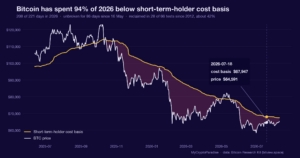
Market briefing: Bitcoin spot ETFs just logged a sixth straight day of withdrawals, with BlackRock's IBIT leading the exit. BTC trades near $59,348, down about 3.2 percent on the day, as institutions trim risk.
- Bitcoin spot ETFs saw $469 million leave on June 24, the largest single-day exit since June 2.
- June 25 brought another $696 million out, marking a sixth consecutive day of outflows.
- IBIT led June 24 redemptions near $239 million, with FBTC at $120.8 million and ARKB at $50.7 million.
The Bitcoin ETF outflow streak just hit six days, with IBIT leading the exit and BTC under $60,000. Is this institutional panic, or smart money setting a trap?
Money is walking out the front door of the Bitcoin ETF complex. On June 24, spot funds shed $469 million in a single session. That was the heaviest daily exit since June 2. The very next day brought $696 million more. June 25 marked the sixth straight day of net withdrawals. The streak is not noise. It is a pattern. BlackRock's IBIT, the largest and usually the steadiest of the group, led the June 24 redemptions with roughly $239 million. Fidelity's FBTC followed with $120.8 million. ARK 21Shares' ARKB lost $50.7 million. When the biggest vehicles lead the exit, the message is clear. This is broad institutional de-risking, not one fund rebalancing. Price has reacted as you would expect. Bitcoin trades near $59,348, down about 3.2 percent over 24 hours, now sitting at a fresh local low under $60,000. The structure matters more than the headline. ETFs are a spot demand pipe. When they bleed, real supply hits the market while a key buyer steps back. That changes the supply and demand balance directly. The story here is not that institutions are scared. It is that institutions are selling, and the market is now discovering price without their bid underneath it. That is the setup we have been tracking.
Why fading ETF demand drains spot liquidity
Spot ETFs are the cleanest demand channel Bitcoin has. Each net inflow forces a real purchase of coins. Each net outflow forces a real sale. So a six-day outflow streak is not sentiment. It is mechanical selling. That is the transmission this market is feeling now. The macro backdrop amplifies it. Liquidity is tightening and risk appetite is cooling. In that environment, the least diligent institutional buyers, the ones who chased late, are the first to fold. They sell into weakness to protect a quarter. That is how institutional capitulation begins. It does not arrive all at once. It arrives as a streak, exactly like this one. The chain is simple. Outflows remove a steady spot bid. Supply that funds must liquidate hits order books. With the largest buyer absent, price has less to lean on. Bitcoin slips, and the move feeds itself as stops trigger below. This is why the ETF outflow streak matters beyond the dollar figure. It tells us who is leaving and in what order. The biggest, most visible holders are trimming first. That is our read, not a confirmed motive. But the behavior fits a market handing risk back before deeper price discovery. The structure points lower before it points higher.
How the selling cascades from BTC into alts
Watch the order of the damage. Bitcoin absorbs the first hit because the ETFs hold Bitcoin. The $469 million and $696 million exits land directly on BTC spot. That is why price broke under $60,000 and now prints near $59,348. The selling pressure is concentrated at the top of the risk curve first. Ethereum feels the second wave. ETH does not get sold by these funds, but it loses its anchor. When Bitcoin leads down, ETH typically follows with a higher beta, falling faster on the way down. Liquidity that might rotate into ETH instead stays parked or exits the asset class entirely. Then come the alts. They sit at the far end of the risk curve and take the largest percentage hits when the top of the book bleeds. Thin order books mean small sell flows move them hard. Long liquidations stack up, and the cascade accelerates. Here is the key. Retail participation sits near a six-year low. The crowd that usually catches falling alts is not in the room. That removes a natural buffer under prices. So this flush can run cleaner and deeper than past ones. The mechanism is the same every cycle. The bid that mattered, the ETF spot demand, stepped back. Until that pipe reverses, every rally faces supply pressing back into it.
Signals that flip this from flush to floor
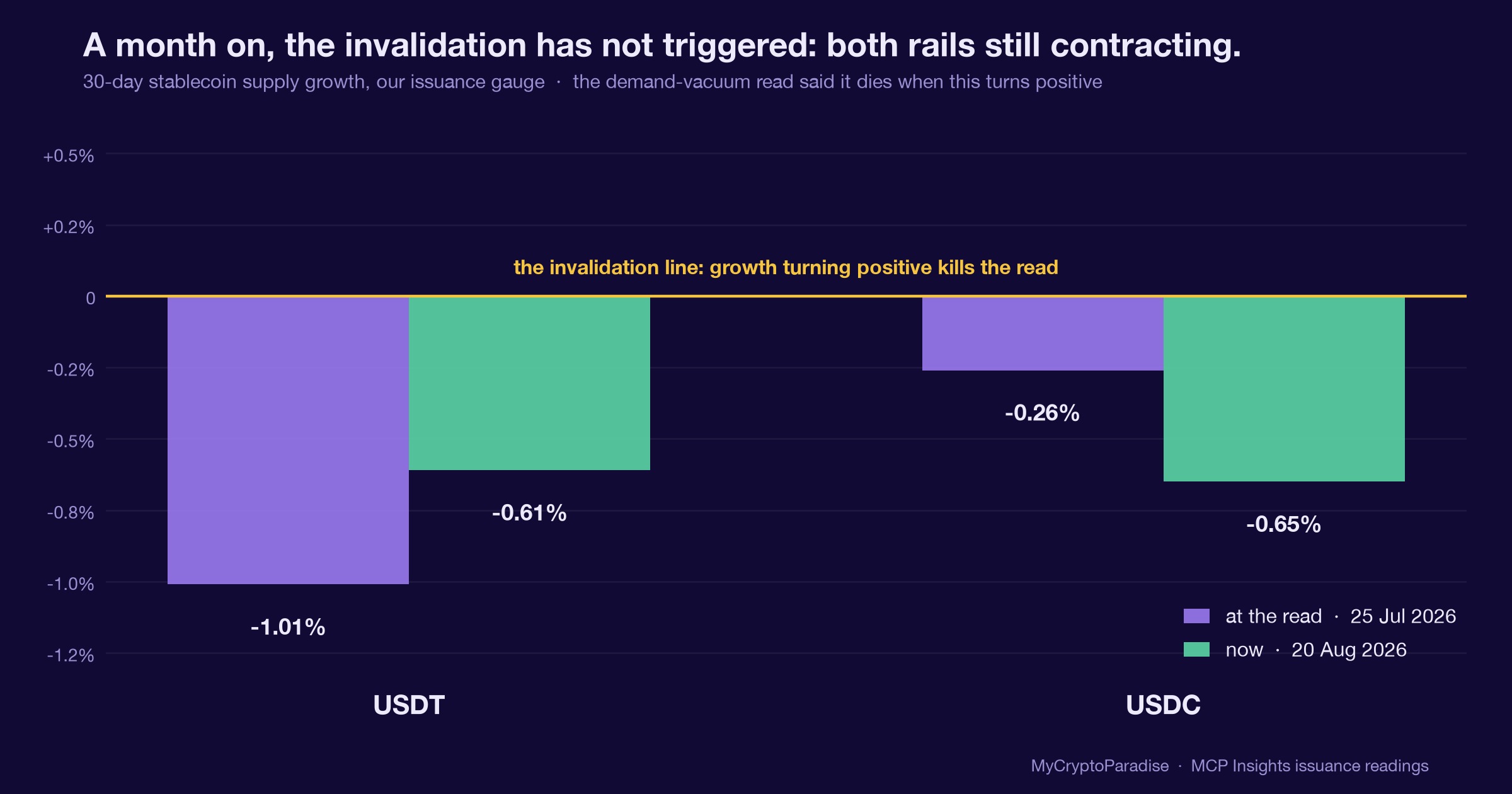
The first thing to watch is the streak itself. A seventh and eighth day of outflows would confirm institutions are still leaving. A clean flip to net inflows would be the earliest sign the spot bid is returning. That single data point matters more than any chart pattern right now. Next, watch price behavior into strength. A short-term bounce is normal and even expected after six down days. The question is what that bounce does. If Bitcoin pushes toward the $73,000 moving average or the $79,000 region near the CME gap and stalls there on weak volume, that is not recovery. That is supply meeting demand at resistance. Then watch the reaccumulation zone. The $55,000 to $44,000 area is where we expect the real test. Invalidation of the bearish case would look like higher highs on rising spot accumulation volume inside that zone, paired with an institutional flow index turning back up after a sustained run below zero. Confirmation of more downside would be continued outflows, lower lows, and a bounce that fails before resistance. So the read is conditional. Strength that stalls is a warning. Weakness that holds the zone on real spot buying is the opportunity. Let the flows and the volume tell you which one is happening.
Where the ParadiseTeam sees the swing trade
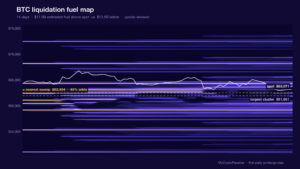
Here is how the ParadiseTeam frames this print. The outflow streak fits a market still mid-flush, not bottoming. BTC near $59,348 just set a local low. It is not yet inside the $55,000 to $44,000 reaccumulation zone where we expect smart money to absorb supply. So we treat this as confirmation of the macro bearish path, not a reversal signal. The actionable edge sits on the bounce, not the dip. We expect a short-term relief rally as the streak exhausts sellers temporarily. That move is the setup. The ParadiseTeam is watching $73,000 near the moving average and $79,000 around the CME gap and the 786 retracement as swing short zones. Strength into those levels on fading volume, while ETF flows stay negative, is where distribution shows itself. That is smart money handing risk to anyone buying the headline bounce. Stops now sit clustered below the local low and beneath round-number support, which is exactly the liquidity a flush toward the reaccumulation zone would target. The flip in our read comes only inside $55,000 to $44,000, on higher highs in spot accumulation volume with an institutional flow gauge curling up. Until then, rallies are for selling, not chasing. Probabilities, not promises. Manage size, define invalidation, and let the flows confirm the turn.
For exact entries, targets, and stop losses with full risk management, that is what ParadiseFamilyVIP is for. New to reading these moves? Start with our crypto trading strategies guide.
ParadiseTeam is monitoring the market situation closely, and we are taking these developments into consideration while building our trading tactics inside ParadiseFamilyVIP.
Crypto trading involves substantial risk. Prices are volatile and you can lose money. This article is educational and is not financial advice. Past performance does not guarantee future results.