Listen: the 2-minute breakdown
Market briefing: Crypto sits in extreme fear at 13 as capital hides in stablecoins. Bitcoin trades near $59,611 while regulated dollar rails keep maturing in the background. The defensive shift is the real story.
- Fear & Greed reads 13, still deep in Extreme Fear, as capital rotates into stablecoins.
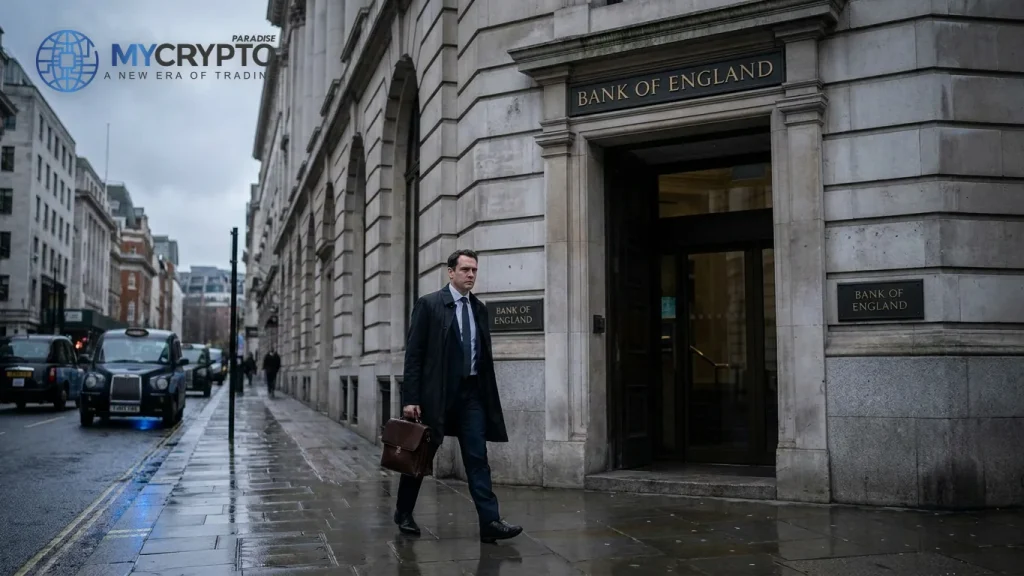
- Bank of England softens sterling stablecoin rules while Metal DAO reviews new tokens for the XMD basket.
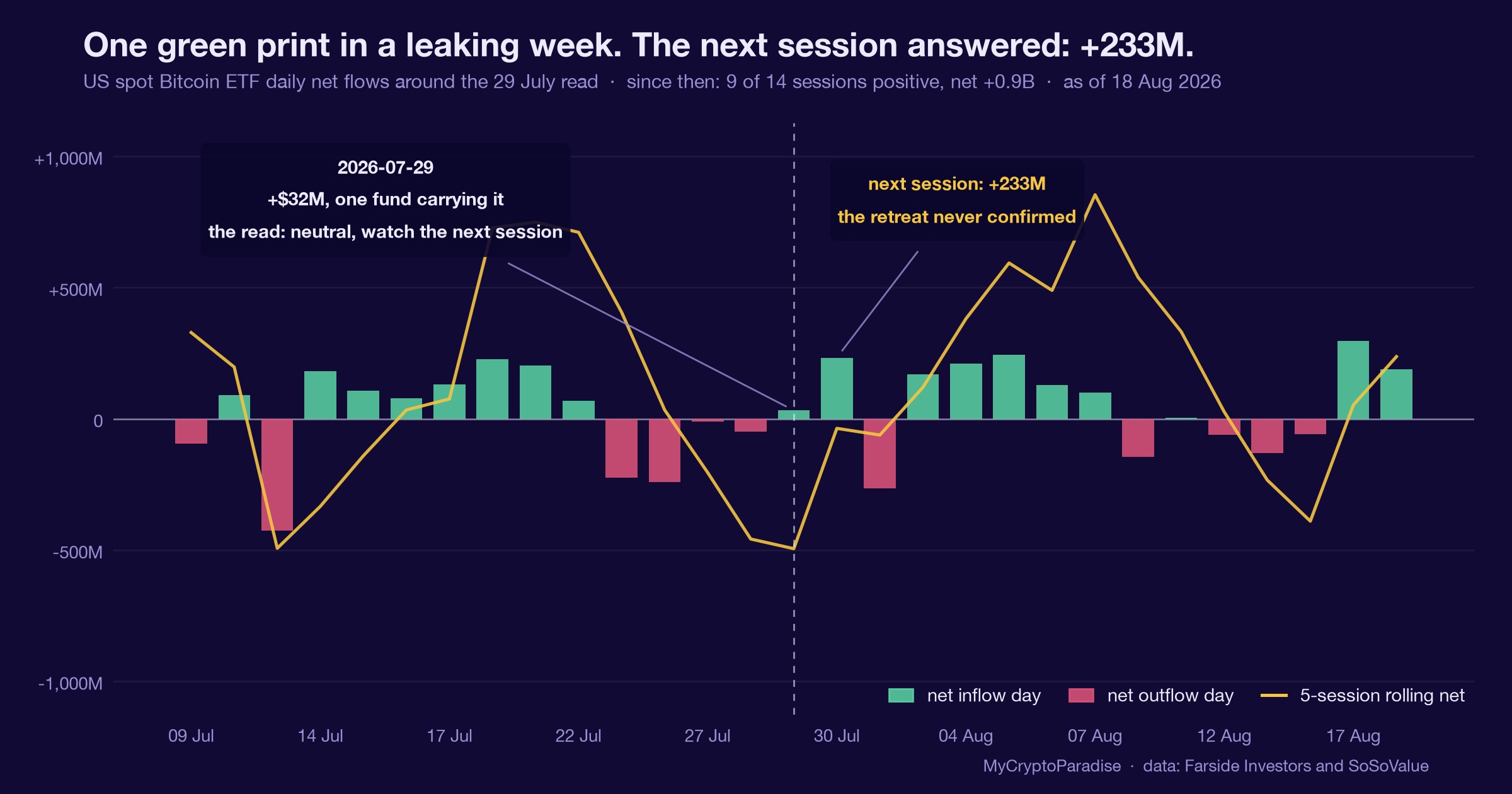
- Bitcoin holds near $59,611 with ETF outflows persisting; stablecoin share is rising on defense, not strength.
Capital is fleeing into stablecoins as the Fear & Greed Index sits at 13 and Bitcoin clings to $59,611. So who is actually selling, and who is waiting?
The headline this week was not a price candle. It was where the money went to hide. With the Crypto Fear & Greed Index parked at 13, deep in Extreme Fear, capital is rotating into stablecoins as the defensive corner of the market. That shift coincided with two quieter developments that matter more than they look. The Bank of England released its final framework for sterling-backed stablecoins, dropping individual holding caps and setting a single issuance limit while allowing most reserves in short-term government debt. At the same time, Metal DAO opened governance proposals to evaluate new tokens for the Metal Dollar basket, letting holders vote on how a shared dollar layer evolves. A vote to study three stablecoins is not the stuff of legend, but it tells you where the careful attention sits while everyone else watches red screens. The pattern is consistent. As Bitcoin lost 5.2% on the week and Ethereum lagged most large caps, regulated dollar rails kept getting built. Money is not leaving crypto so much as stepping sideways into instruments that do not move. That is a tell. Nothing says conviction quite like a market that greets new dollar tokens by refusing to buy anything else. The driver here is simple: a flight to stablecoins during fear, with the regulatory and governance plumbing maturing precisely as capital goes defensive. Everything downstream, from Bitcoin to Ethereum to the lone strength in Solana, traces back to that single move.
Why dollars are leaving the risk trade
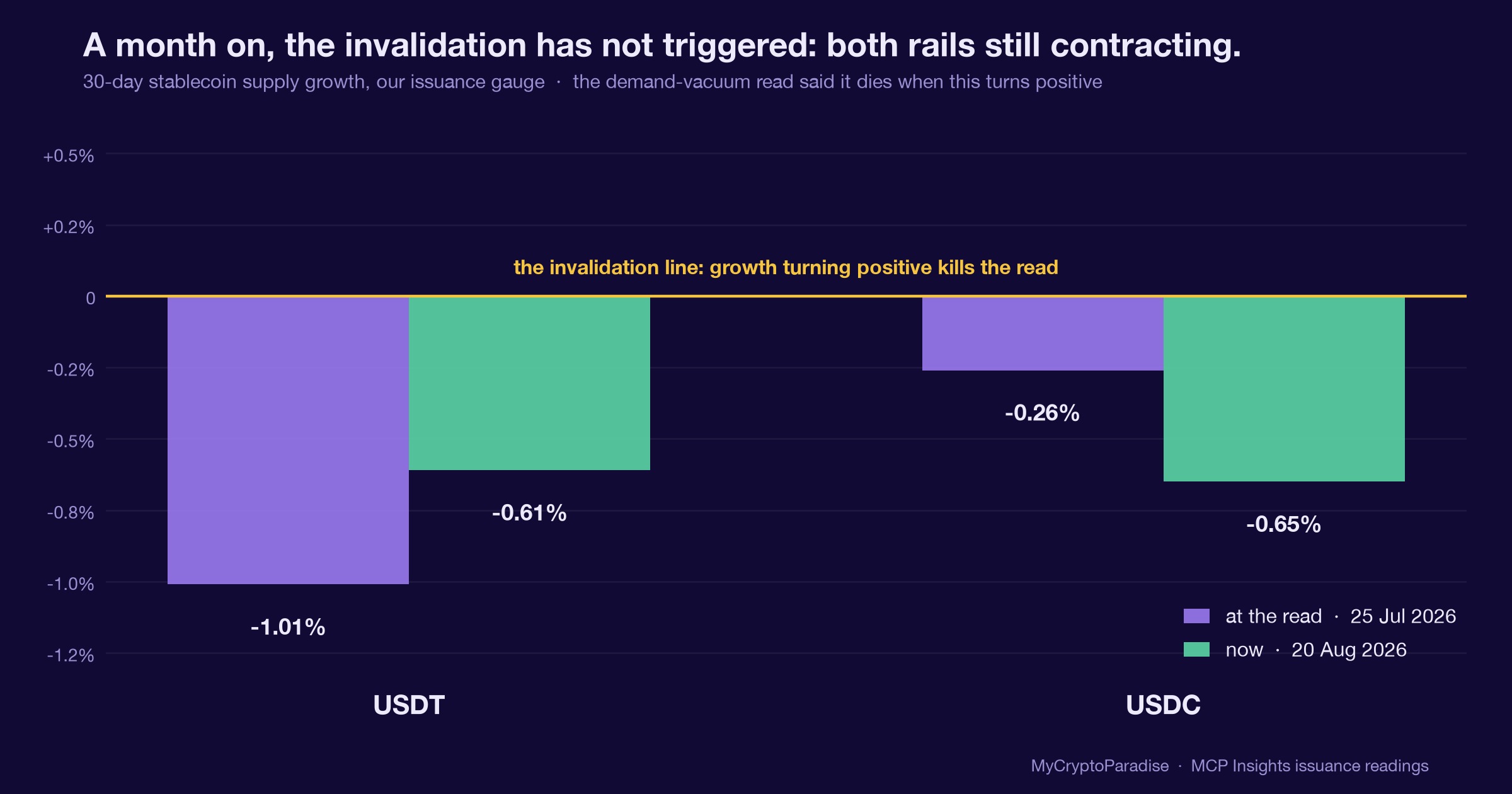
A rotation into stablecoins is a liquidity signal before it is anything else. When fear runs this deep, holders do not always exit to fiat. They park in onchain dollars that hold value while they wait. That parked capital is the macro transmission point. It explains why the Bank of England softening its rules and Metal DAO reviewing the XMD basket both land now. Regulators and protocols are building the rails for dollars exactly as dollars become the trade. The framework easing matters because it makes regulated stablecoins more practical for payments and settlement. The governance review matters because it signals where future liquidity will route. Neither is an immediate price catalyst for Bitcoin. Both are foundational. The risk is fragmentation. As more institutions move toward onchain dollars across many issuers, chains and venues, liquidity can thin and scatter. A shared basket like XMD is one answer to that. The deeper point for traders is that capital sitting in stablecoins is not capital bidding for Bitcoin or Ethereum. It is dry powder on the sidelines, defensive by design. Until that powder rotates back into spot, the path of least resistance for risk assets stays heavy. The stablecoin story is structurally constructive for the long term and quietly bearish for price in the near term, because it confirms the crowd is choosing shelter over risk.
How the stablecoin flight pressures Bitcoin
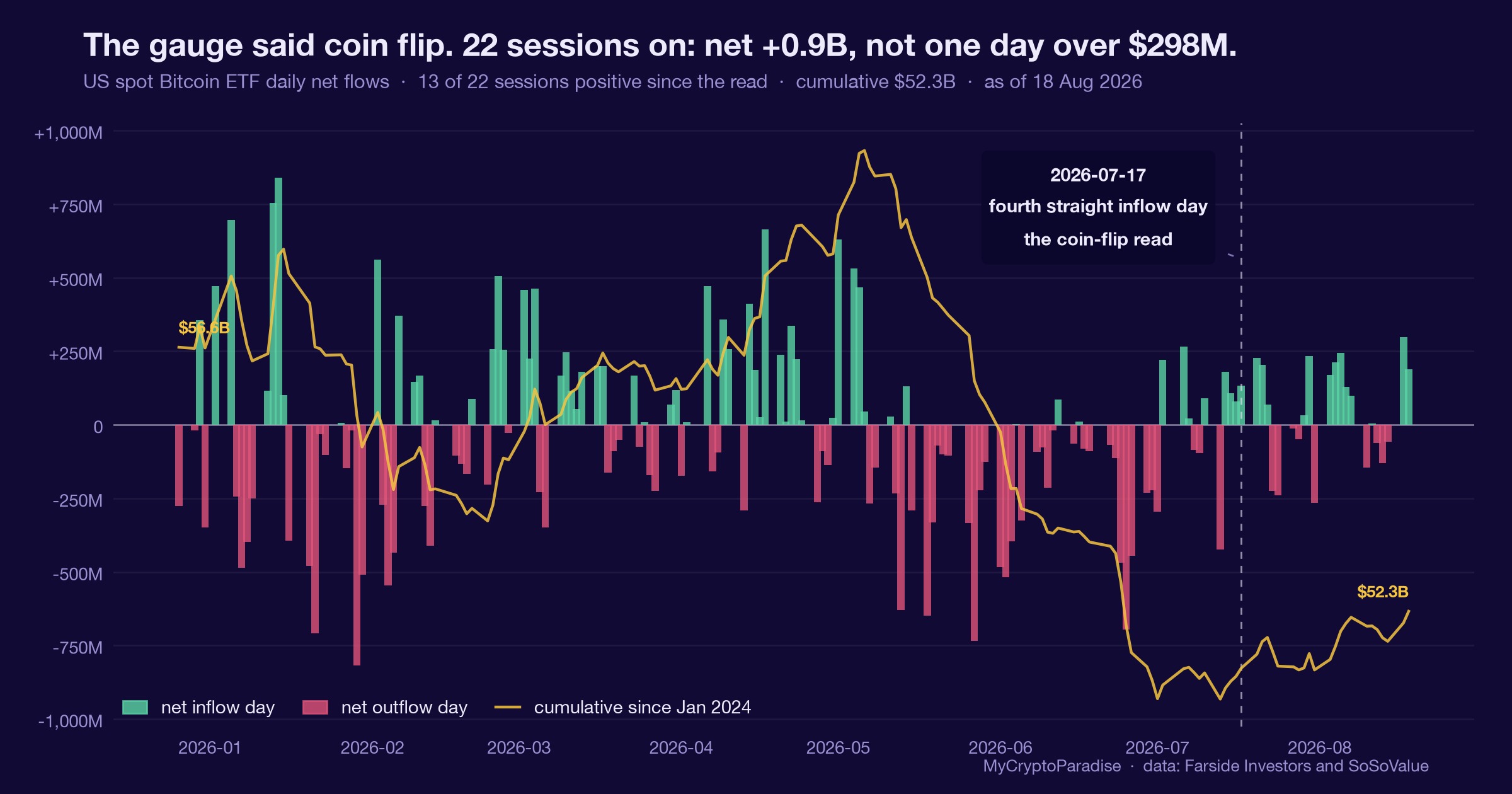
Trace the chain. Defensive capital parks in stablecoins, institutional demand for spot exposure fades, and the bid under Bitcoin thins. The week showed it. Bitcoin fell 5.2% and briefly slipped below $59,000 as ETF outflows persisted across both Bitcoin and Ethereum funds. That is the first domino. Bitcoin sets the tone, and when its institutional bid weakens, everything beta to it weakens faster. Ethereum is the clearest victim. ETH lagged most large caps and slid alongside its own outflows, behaving like a higher-beta proxy for the same risk-off impulse pressuring Bitcoin. With dollars sitting idle, there is no fresh demand to absorb supply, so the larger caps bleed in an orderly, conviction-light way. Then come the alts, which mostly finished the week in the red. The one exception was Solana, up 5.5% on a specific ecosystem narrative rather than any broad recovery. That kind of isolated strength is typical of a defensive tape. When the whole market cannot rise, capital concentrates into a single story, and that rotation is exactly the sort of move smart money can exploit and exit. The liquidity cascade is textbook. Stablecoins gain relative share, Bitcoin and Ethereum drift lower, and a narrow pocket of strength stands in for breadth that is not there. Defensive markets reward survivors, not leaders.
Signs the defensive rotation is exhausting
The cleanest tell is the stablecoin share itself. If defensive rotation peaks and capital starts leaving stablecoins back into spot Bitcoin and Ethereum, that is the first sign fear is exhausting. Until then, treat rising stablecoin share as confirmation the risk-off move has further to run. Watch the Fear & Greed Index for a sustained stretch below its lows rather than a single print. It sat at 13 against 12 yesterday and 14 last week, which is grinding fear, not capitulation. A bottoming process usually needs that reading to stay buried while price stops making new lows. Watch the ETF flows. Persistent outflows confirm institutions are still trimming, and a genuine turn needs those flows to flip positive and hold, not bounce for a day. On price, the local low near $59,000 is the line in the sand. A decisive loss of it opens the door to the deeper zone. Reclaiming ground and building higher lows on real spot volume would argue the flush is pausing. Invalidation of the bearish read is straightforward: stablecoin share falling, ETF inflows returning, and Bitcoin holding above its recent low together would say the defensive trade is over. Confirmation is the opposite, all of it pointing the same way down. The stablecoin developments are not the trigger. They are the backdrop that tells you which way the wind is blowing.
What the stablecoin shift means for liquidity
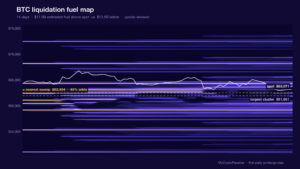
The ParadiseTeam reads this stablecoin flight as the liquidity story behind the price, not a sideshow. With Bitcoin near $59,611 and the local low around $59,000, capital hiding in dollars confirms the bid is absent, not just shy. That fits the broader view that institutions who were not careful with their strategy are being squeezed toward forced selling, with capitulation still ahead. Stablecoins building share is dry powder accumulating off the board. The question is where it deploys. Our framework does not chase weakness here. We are watching for a short-term bounce toward the $73,000 to $79,000 region, where a moving average and an old CME gap sit, as the more interesting area to assess, not the current drift. Below, the $55,000 to $44,000 band remains the zone we care about for reaccumulation, the place where parked dollars would logically come back to work if and when frustrated supply is absorbed. The signal we want is not a hopeful candle. It is a sustained stretch of institutional frustration paired with higher highs on genuine spot accumulation volume inside that lower band. Solana's lone strength is a narrative rotation, the kind of move that rewards the early and traps the late. None of this is a forecast. It is a probability read. The stablecoin maturation tells us the rails are ready for the next leg; it does not tell us the floor is in.
For exact entries, targets, and stop losses with full risk management, that is what ParadiseFamilyVIP is for. New to reading these moves? Start with our crypto trading strategies guide.
ParadiseTeam is monitoring the market situation closely, and we are taking these developments into consideration while building our trading tactics inside ParadiseFamilyVIP.
Crypto trading involves substantial risk. Prices are volatile and you can lose money. This article is educational and is not financial advice. Past performance does not guarantee future results.