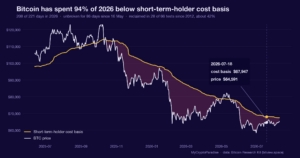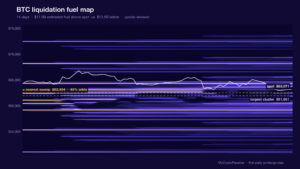
Market briefing: US regulators have eased stablecoin rules, a significant development for the crypto market. With Bitcoin currently trading at $60,168, this shift could influence short-term price action, potentially setting up strategic opportunities.
- US regulators eased stablecoin reserve and licensing requirements.
- This shift signals increased regulatory acceptance and clarity for digital assets.
- Potential for greater institutional participation and liquidity flows into crypto.
US regulators have announced a notable softening of stablecoin rules, easing reserve and licensing requirements. This development marks a significant pivot in the regulatory landscape. What does this mean for crypto market structure and liquidity?
A landmark decision from US regulators has provided clearer guidelines for stablecoins, specifically easing requirements around reserves and licensing. This move signals a more accommodating stance toward digital assets within the traditional financial system. For years, stablecoins have operated in a regulatory grey area, hindering broader institutional adoption and creating uncertainty for issuers and users alike. The new approach aims to integrate stablecoins more formally, potentially unlocking significant capital flows. This shift is not just about stablecoins themselves; it represents a broader recognition of crypto's role in the global financial infrastructure. The implications extend beyond compliance, touching on market confidence, innovation, and the eventual mainstreaming of digital currencies. This development could reshape how institutions engage with the crypto ecosystem, potentially paving the way for more structured and substantial investment.
US Stablecoin Rules Shift: Why It Matters
The softening of stablecoin rules is a structural catalyst for the crypto market. Regulatory clarity has consistently been a bottleneck for institutional capital. By reducing ambiguities around reserve requirements and licensing, US regulators are lowering the barrier to entry for traditional finance. This provides a clear framework for banks and financial institutions to participate in the stablecoin ecosystem, either as issuers, custodians, or users. Increased regulatory certainty can foster greater trust and reduce perceived risks, encouraging more mainstream adoption. This move also sets a precedent for other jurisdictions, potentially driving a global trend towards more integrated crypto regulation. The long-term effect could be a deeper, more liquid crypto market, less susceptible to sudden policy shifts and more attractive to large-scale investors seeking stability.
Stablecoin Changes: Market Liquidity Impact
The immediate impact of softened stablecoin rules could manifest as improved liquidity and capital efficiency across the crypto market. With clearer guidelines, more institutional players are likely to enter the stablecoin space, increasing the overall supply and demand for these crucial on-ramps. This enhanced liquidity can directly benefit Bitcoin and Ethereum, as stablecoins are often the primary trading pairs for these assets. A more robust stablecoin infrastructure means smoother, larger transactions, reducing slippage and market fragmentation. For altcoins, this could translate to a more stable base layer for trading and development. Smart money understands that regulatory developments often precede significant capital injections, even if retail participants are slow to react. This structural improvement could lay the groundwork for a more mature market cycle, potentially providing the necessary liquidity for larger price movements.
What to Watch After Stablecoin Rules Soften
Following the stablecoin rule changes, traders should monitor several key indicators for confirmation or invalidation of potential market shifts. Watch for sustained increases in stablecoin market capitalization and trading volume, particularly from institutional wallets. A significant uptick in spot accumulation volume for Bitcoin and Ethereum, especially within the $55,000-$44,000 zone, would be a strong signal of smart money reaccumulation. Conversely, if price rejects key resistance levels, such as the $73,000 moving average or the $79,000 CME gap, without substantial spot volume, it could indicate a temporary relief rally rather than a fundamental shift. We also track a proprietary index; a prolonged period below zero, combined with higher highs on spot accumulation volume, would signal a macro bottom. The key is to distinguish genuine institutional inflow from retail-driven euphoria.
Reading Stablecoin Rule Changes Through Smart Money
The ParadiseTeam views this stablecoin rule softening as a potential catalyst for the short-term bounce we have been anticipating. With Bitcoin currently at $60,168, this news could fuel a rally towards our identified swing short entry targets: the $73,000 moving average and the $79,000 CME gap/786 Fib level. While the news appears bullish, our cautious medium-term bearish bias remains. Smart money often uses seemingly positive news to distribute into retail enthusiasm. We expect institutions, who may not have been diligent in their strategies, to be forced to sell their Bitcoin at a loss during a final flush. This capitulation event will likely drive price down to our key reaccumulation zone of $55,000-$44,000. It is in this zone that smart money will aggressively absorb supply, forming the macro bottom. This stablecoin development might provide the necessary liquidity for the initial relief rally before the deeper correction plays out. Traders should remain vigilant, using any upward movement as a potential opportunity to position for future downside.
For exact entries, targets, and stop losses with full risk management, that is what ParadiseFamilyVIP is for. New to reading these moves? Start with our crypto trading strategies guide.
ParadiseTeam is monitoring the market situation closely, and we are taking these developments into consideration while building our trading tactics inside ParadiseFamilyVIP.
Crypto trading involves substantial risk. Prices are volatile and you can lose money. This article is educational and is not financial advice. Past performance does not guarantee future results.