Listen: the 2-minute breakdown
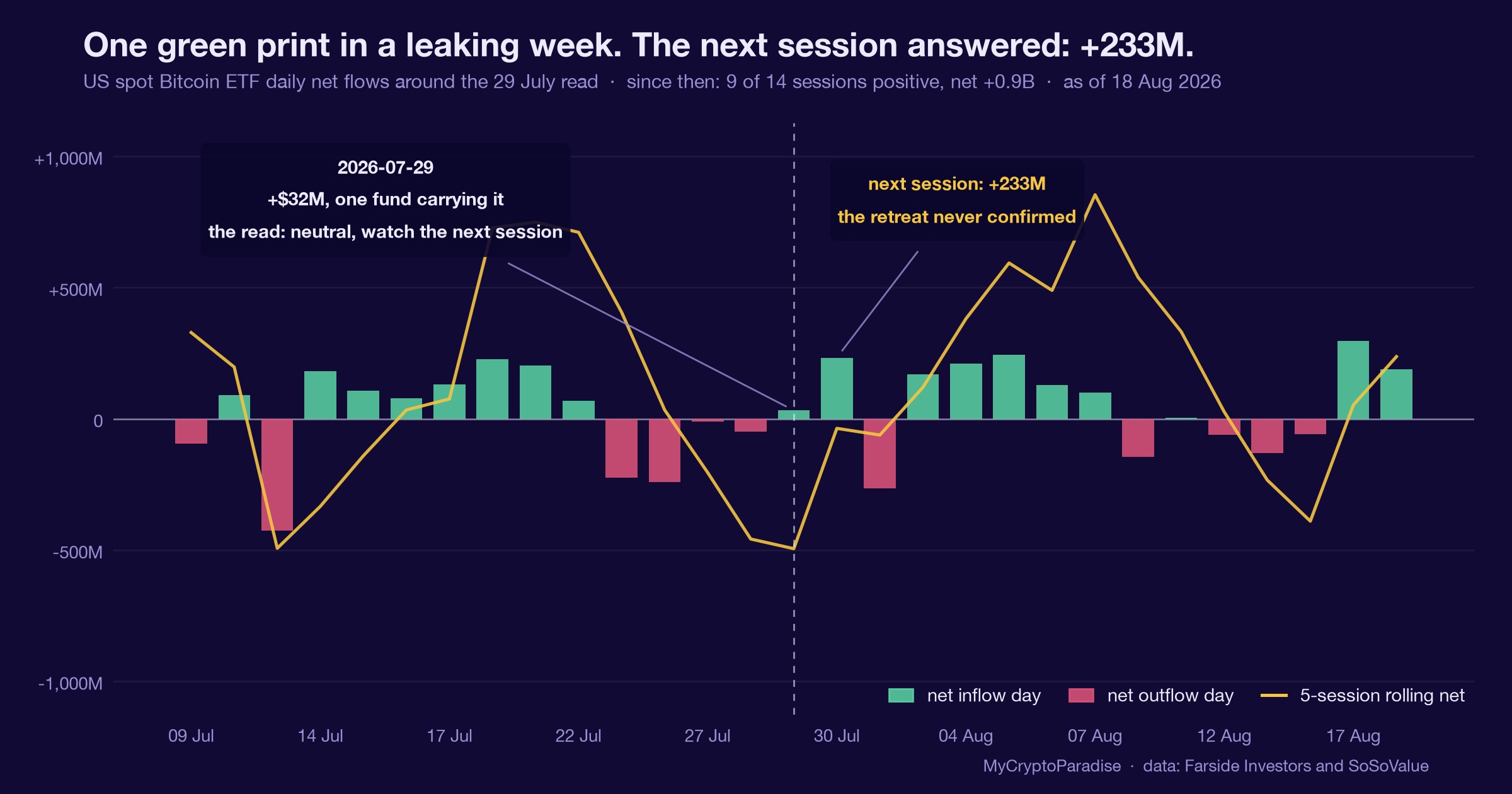
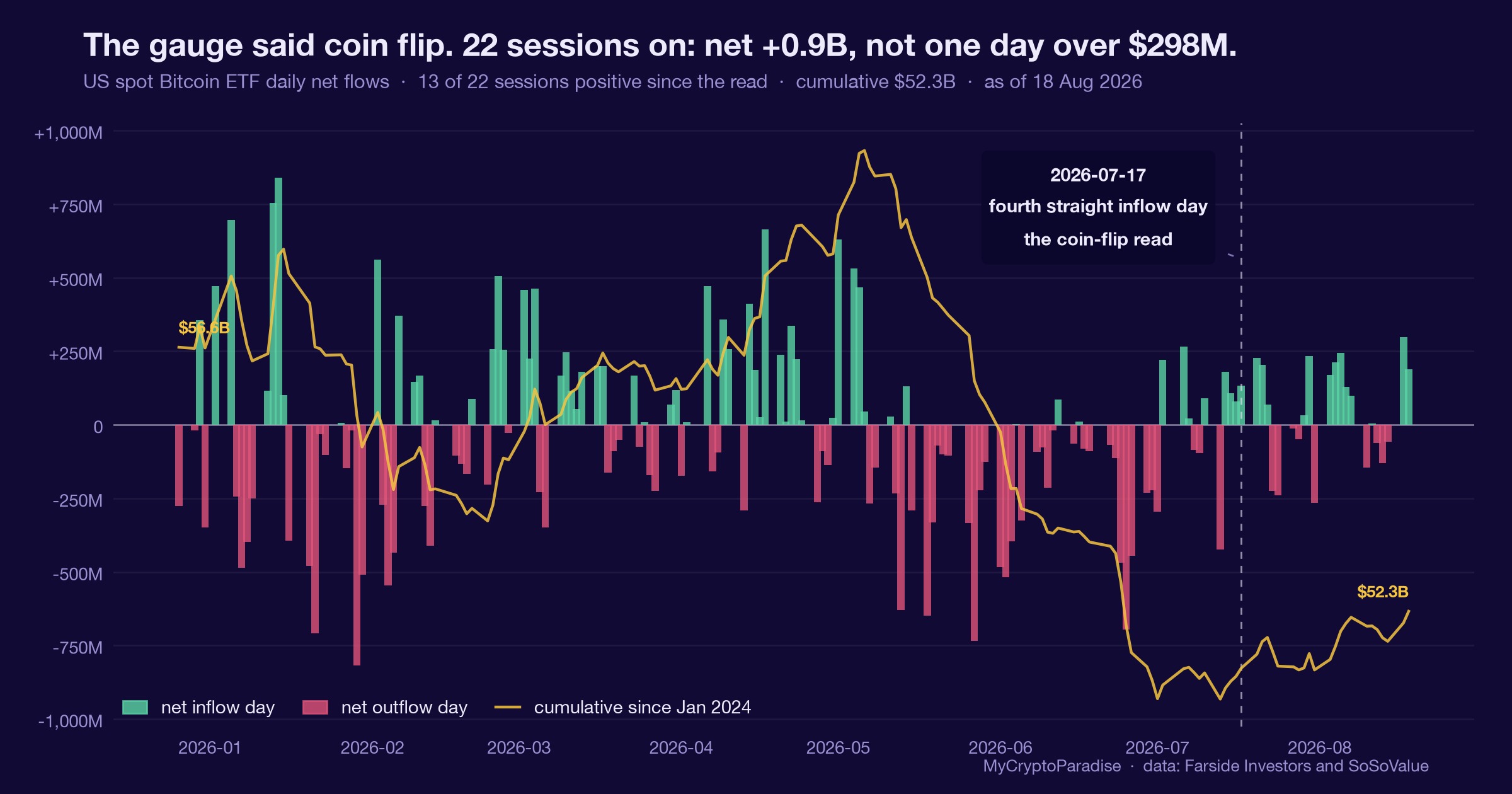
Market briefing: Bitcoin has slipped under $60,000 to $59,979 as ETF outflows and a risk-off mood drain liquidity. We read this dip as a shakeout, not a top, with smart money accumulating while retail panics.
- Bitcoin trades at $59,979, now below the psychological $60,000 line after fresh ETF outflows.
- Risk-off sentiment is thinning liquidity, and the move looks more like a stop hunt than real spot selling.
- Bullish divergences on volume and RSI suggest bear exhaustion as smart money positions for a reversal.
Bitcoin below $60,000 has retail bracing for worse as ETF outflows mount. But what if this is exactly where smart money wants you scared?
Bitcoin has dropped below $60,000. The price now sits at $59,979, a slip of about 0.2 percent on the day and barely a flicker on the hour. The trigger is familiar. ETF outflows keep draining demand while a broader risk-off mood pushes money out of anything that moves. We covered the scale of those outflows earlier today. The new development is simpler and louder: the price has finally given up the round number that retail watches like a heartbeat. Round numbers carry no special powers, yet markets treat them as cliffs. Cross one and the headlines write themselves. The story everyone now hears is reduced institutional demand meeting thinning liquidity, and selling pressure doing the rest. That story is true as far as it goes. What it leaves out is who is selling, who is buying, and where the stops are stacked. A few dollars under $60,000 is not a collapse. It is a level. Below it sit the liquidations of traders who promised themselves they would hold. Above it sit the orders of those who shorted the breakdown. The market knows where both groups live. The question for a trader is not whether the headline is real. It is whether the reaction has gone further than the facts deserve. That is usually where the interesting work starts.
Why thin liquidity makes this drop loud
The transmission here runs through liquidity, not panic alone. ETF outflows mean institutional buyers are stepping back or taking profit. That removes a steady bid from the market. When the steady bid thins, the same volume of selling moves price further. Risk-off sentiment then compounds the effect. Investors trim exposure across assets, and Bitcoin, still the market's high-beta proxy, feels it first and hardest. So a modest 0.2 percent daily move arrives with an outsized psychological weight, because it lands on a round number in a low-liquidity tape. This is the mechanism worth understanding. Outflows do not crash the price by themselves. They make the order book shallow. A shallow book turns ordinary selling into sharp wicks. Those wicks hunt stops below obvious levels. The deeper point is structural. Reduced institutional demand is a real headwind for the medium term, and we are not dismissing it. But demand and price often move out of step at turns. Institutions can be selling the headline while the price builds a base. The outflow data describes the past few sessions. It does not dictate the next move. Markets are forward looking, and they reliably price tomorrow's fear into today's candle. When everyone can recite why the chart should fall, much of that selling has already happened. That is the gap between the press release and the order book.
How the dip ripples from BTC to alts
Start with Bitcoin, because everything downstream takes its cue from it. At $59,979, BTC sits just under $60,000, a level the daily chart has been fighting over. A clean loss of liquidity here pulls the whole complex lower in the short term. Stops below recent lows are the first target. Once they clear, the selling tends to exhaust itself, because the supply that was always going to panic has now panicked. Ethereum follows with a lag and usually a larger swing, since it carries more leverage and less of the safe-haven story. When BTC wicks under a round number, ETH typically overshoots, then snaps back faster if Bitcoin stabilizes. Alts amplify both moves. In a risk-off tape they bleed first and bounce last, so their depth of drop is a sentiment gauge more than a forecast. Here is the liquidity read that matters. We see bullish divergence between price and volume, a lower low on price meeting a lower high on volume. We see the same against RSI, a lower low on price meeting a higher low on momentum. Both say the selling is running on fumes. Previous lows looked like long squeezes, traders flushed out by leverage, not investors dumping spot. That distinction decides everything. A squeeze removes weak hands and resets the board. Genuine distribution does not produce a higher low in momentum while the crowd is busy shorting the breakdown.
What confirms a reversal versus a deeper slide
The next daily candle does most of the talking. A green close back above $60,000 would frame this break as a stop hunt rather than a trend, a classic close below to grab liquidity, then a reclaim. Stronger still would be a close above $60,300, the Fibonacci 1.272 level, on volume that pushes above its moving average. Thin-volume bounces convince no one. A real reversal needs participation. We are also watching momentum for agreement. MACD lines reclaiming and turning up, and a bullish cross on the Stochastic RSI, would confirm that the divergences are translating into actual buying, not just slowing selling. Those signals together would suggest the first wave of a base is in. Now the other side, because the read is not certain and we will not pretend it is. If Bitcoin loses $58,000, the zone bulls have been defending, the shakeout thesis weakens. A daily close there opens the door toward $54,000, the next important support, and the patient accumulation case would have to wait for lower prices. Continued heavy ETF outflows alongside a failure to reclaim $60,000 would tilt the odds back toward the bears. So the line is clear. Reclaim and hold above $60,000 with momentum and volume agreeing, and this is bear exhaustion. Lose $58,000 with conviction, and respect the downside. Let the candle decide, not the headline.
What this break means for liquidity and positioning
The ParadiseTeam reads this break through a single lens: where is the liquidity, and who is offside. At $59,979, Bitcoin is sitting on the daily support shelf bulls have defended near $58,000, with $54,000 the deeper line if this fails. The crowd is leaning bearish into that support, and one heavily short whale is risking liquidation up at $65,836. That is the detail that reframes the whole tape. When inexperienced size is short into support, into bullish divergences, the fuel for an upside squeeze is being built by the very people betting against it. Their stops sit above. That is liquidity smart money tends to hunt. So what does this specific news change? Very little about structure, and quite a lot about sentiment. The ETF-outflow story gives retail a clean reason to short the round-number break, exactly when momentum is diverging higher. That is the misalignment we look for. The level that matters is $60,000 reclaimed on a daily close, with $60,300 as confirmation. Hold above, and the short side becomes the trapped side. Lose $58,000, and we stand aside and respect the move toward $54,000. This is a probability read, not a promise. The point is positioning, not prediction: bad news arriving into support, with the crowd already short, is more often an accumulation window than a trapdoor.
For exact entries, targets, and stop losses with full risk management, that is what ParadiseFamilyVIP is for. New to reading these moves? Start with our crypto trading strategies guide.
ParadiseTeam is monitoring the market situation closely, and we are taking these developments into consideration while building our trading tactics inside ParadiseFamilyVIP.
Crypto trading involves substantial risk. Prices are volatile and you can lose money. This article is educational and is not financial advice. Past performance does not guarantee future results.