In short
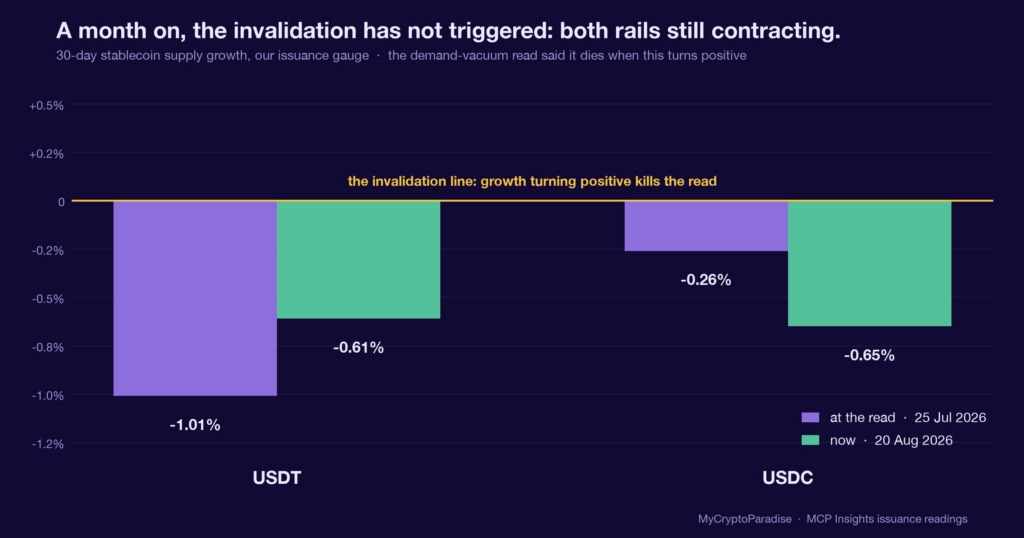
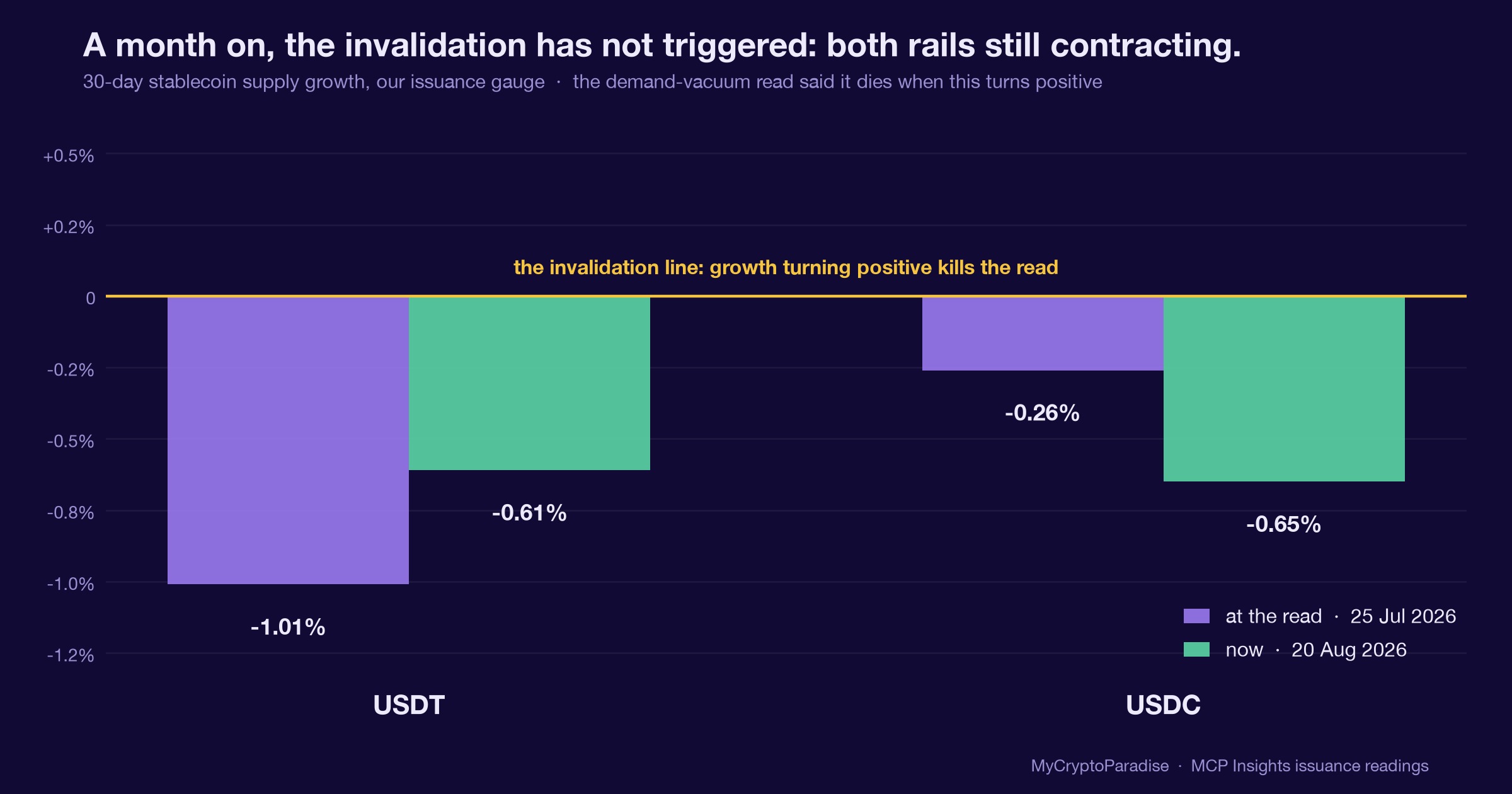
Stablecoins are the dry powder of crypto: dollars already inside the system, waiting to buy. On 25 July 2026 the read was a demand vacuum. Monthly stablecoin inflows to exchanges had roughly halved from their peak, per the MCP on-chain Insider feed, and our own issuance gauge corroborated it: USDT supply growth ran at minus 1.01% over 30 days and USDC at minus 0.26%, with the Fear and Greed Index at 27. We called it neutral, explicitly not a sell signal, and named the invalidation: both rails turning positive. A month later the invalidation has not triggered, both rails still read negative, and Bitcoin rose roughly 10% anyway. That combination is the lesson of this piece: a demand vacuum describes fuel, not direction, and a market can grind higher on thin fuel. The read refused to be bearish, and that refusal was the correct call.
What stablecoin flows actually measure
Before dollars buy Bitcoin, they usually become stablecoins. Minting turns bank money into on-chain buying power; moving those stablecoins onto exchanges stages them next to the order book.
So the plumbing has two dials. Supply growth tells you whether new dry powder is being created at all. Exchange inflows tell you whether existing powder is being staged to spend.
The inflow dollar figures in the July read came from the Insider feed’s third-party data, and we name them as such. The supply-growth readings are our own issuance gauge, and those are what we grade ourselves against.
The 25 July reading
The feed put monthly USDT and USDC exchange inflows near $2.3B against a yearly average around $3.7B. At Bitcoin’s all-time high the same figure ran near $5.6B. Roughly half the fuel was arriving where the buying happens.
Our issuance gauge agreed on the direction: USDT 30-day supply growth at minus 1.01%, USDC at minus 0.26%. New powder was not being minted into the market.
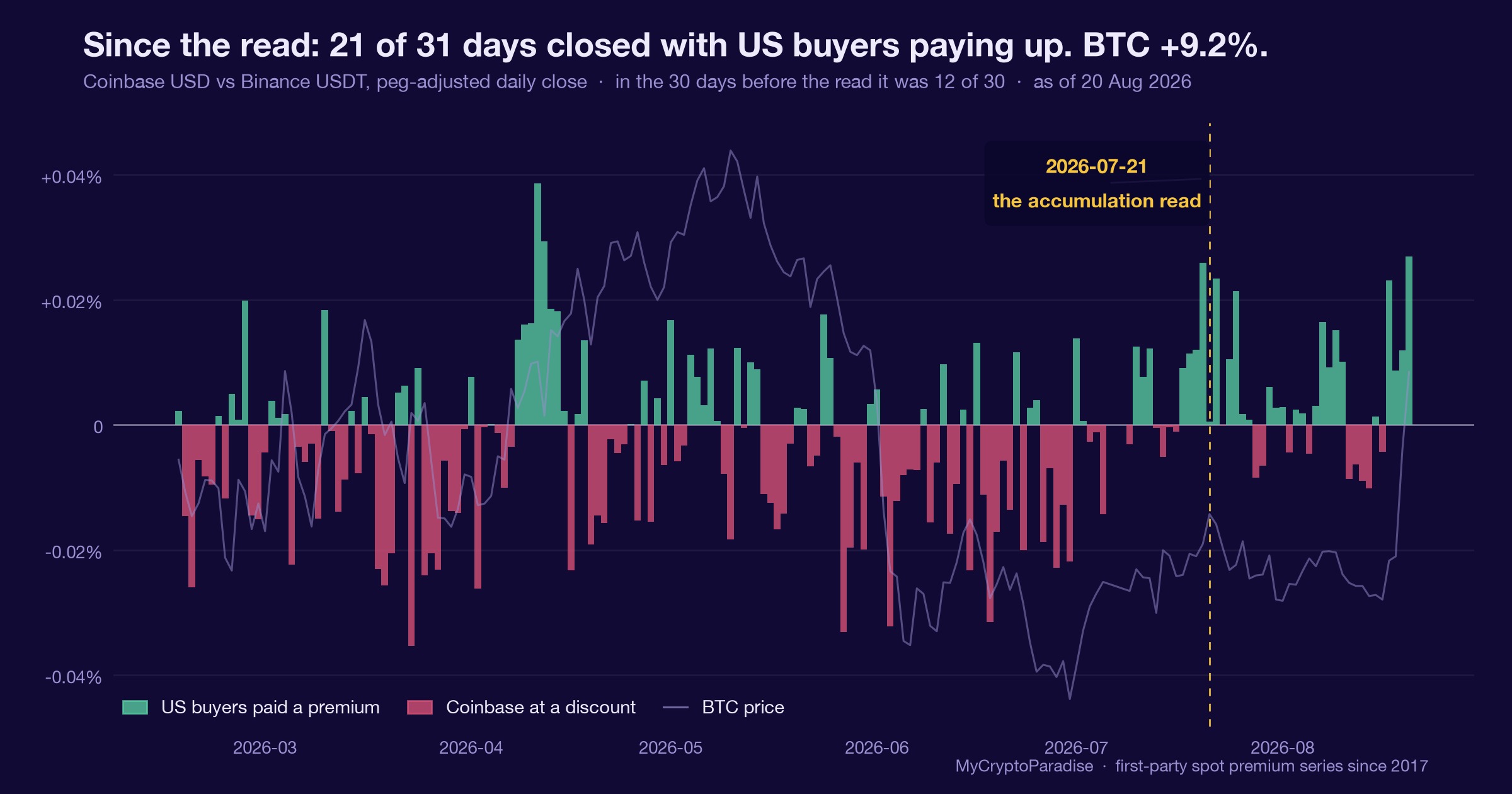
Sentiment matched the plumbing. The Crypto Fear and Greed Index sat at 27, and our Coinbase premium gauge read in line at its 54th percentile: no urgency on either side.
The posture we published: neutral, base-building conditions, and for most traders no trade at all.
What is different here
The ParadiseTeam separates fuel from direction. Thin stablecoin flows measure how much buying power is staged, not which way price goes next, and we said so on the day rather than dressing a vacuum up as a crash call. The read carried its own kill condition, and we grade against it below.
Why thin inflows cut both ways
Peak inflows tend to be a late signal. The biggest staging of stablecoins happens as the last buyers chase, which is why record inflows often sit near tops rather than bottoms.
A vacuum is the mirror image. Weak conviction now, but also the absence of the crowd that usually marks a top.
That is why a demand vacuum is not a sell trigger. It says the tank is low; it does not say which pedal gets pressed.
What it does change is fragility in both directions: less buffer to absorb forced selling, and less crowd to sell into a rally. Thin markets travel further on less.
How the read has graded
The invalidation we published was concrete: USDT and USDC 30-day supply growth turning back above zero would mark fresh fuel entering and end the vacuum framing.
A month on it has not triggered. As of 20 August our issuance gauge reads USDT at minus 0.61% and USDC at minus 0.65%. Both rails still contracting, as the banner above shows.
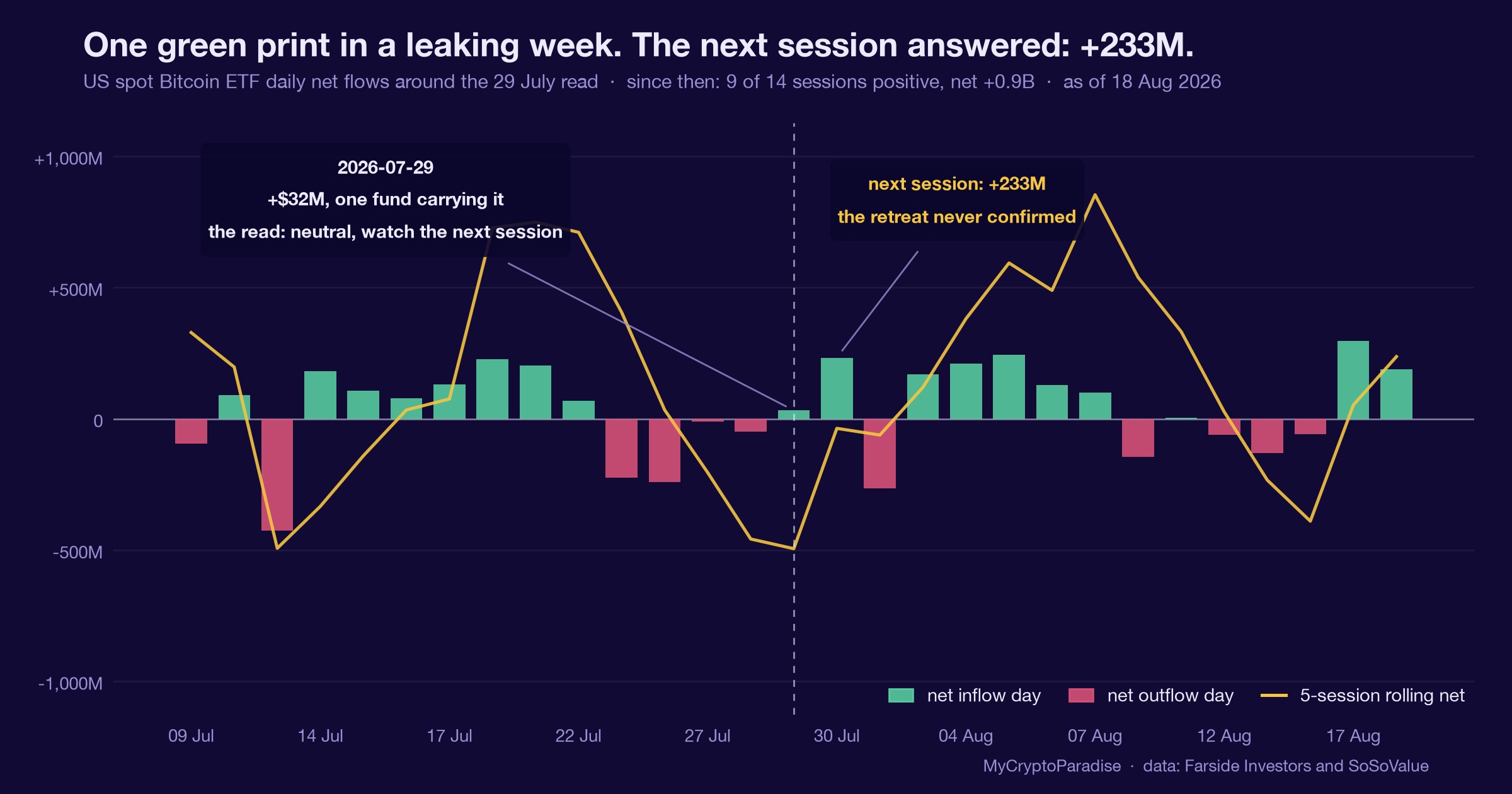
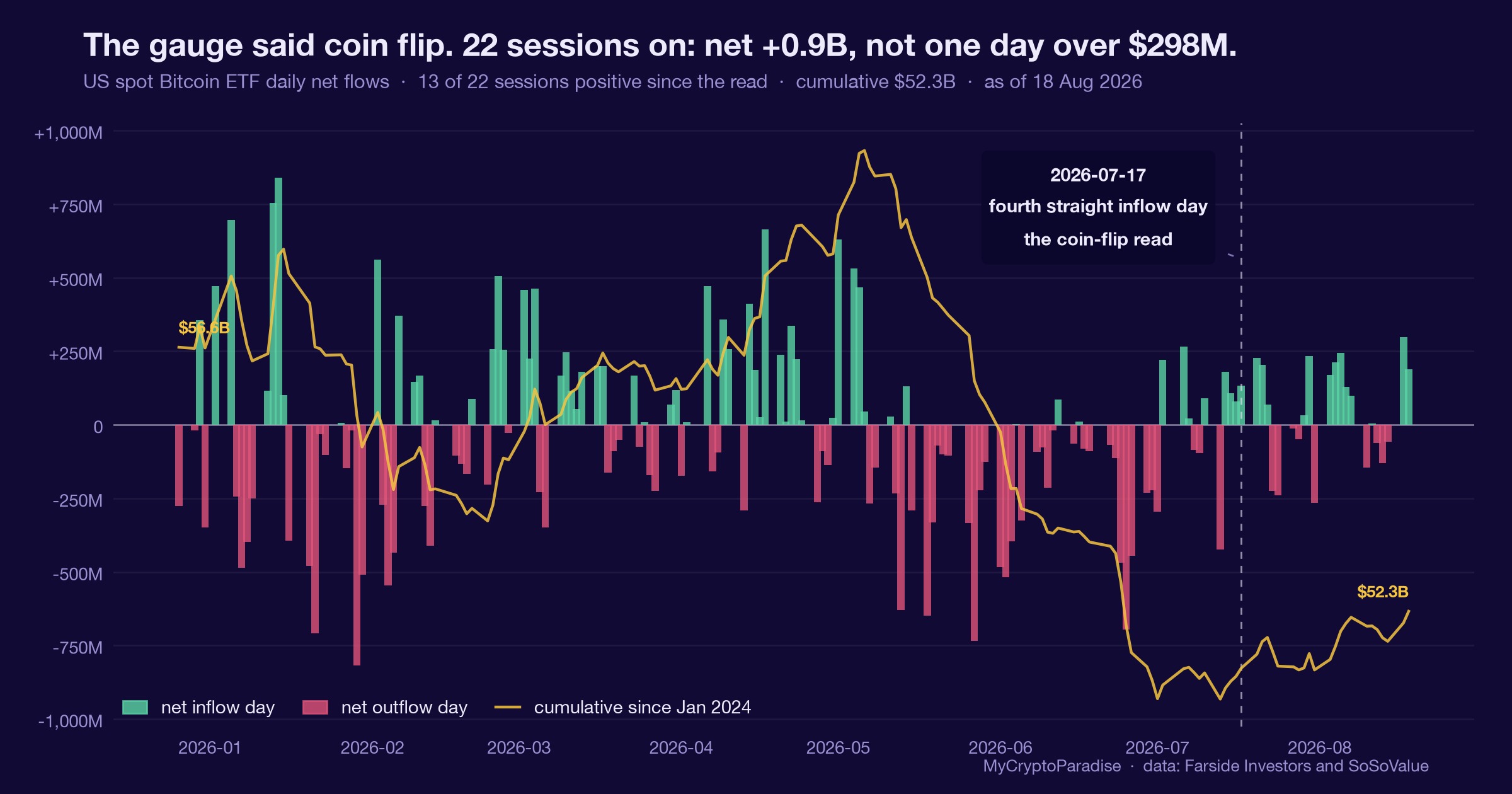
And Bitcoin rose roughly 10% over the same stretch. A market grinding higher on thin fuel is exactly the path a neutral vacuum read leaves open, and it is the same quiet-tape picture our ETF-flow and premium reads graded over the identical window.
Had we dressed the vacuum as a bear call, this would be a miss. Because the read refused direction and said why, it graded as written: conditions described honestly, kill condition intact, no forecast to apologise for.
Reading stablecoin flows yourself, step by step
- Separate the two dials: supply growth is powder being created, exchange inflows are powder being staged.
- Compare against the cycle, not last week. Halved from peak means something; down on Tuesday does not.
- Resist the vacuum-equals-crash reflex. Thin fuel raises fragility both ways; it picks no direction.
- Cross-read sentiment and spot premiums. A vacuum inside fear with flat premiums is base-building texture, not urgency.
- Write the refill condition down. For this read: both rails turning positive on the 30-day gauge.
The wider positioning picture sits on the MCP Insights hub, and if the mechanics here are new, start with MCP University.
Act and invalidate
| Scenario | What confirms it | What kills it |
|---|---|---|
| The vacuum persists | Both rails hold negative, inflows stay near cycle lows | Issuance growth flipping positive on both rails |
| Demand returns | Supply growth turns positive and exchange inflows rebuild | A one-week blip that fades back below zero |
| Fragile downside | Forced selling meets no stablecoin buffer | Fresh powder arriving before any flush starts |
Posture: neutral tapes reward patience. The refill of the fuel tank, not the price wiggle of the week, is what changes this read.
Frequently asked questions
What do stablecoin inflows to exchanges measure?
They measure buying power being staged next to the order book: dollars already converted into USDT or USDC and moved to where trades happen. High inflows mean the crowd is arming to buy; low inflows mean conviction is thin. They describe fuel, not direction.
Is low stablecoin issuance bearish for Bitcoin?
Not by itself. Our 25 July 2026 vacuum read kept a neutral posture, and Bitcoin rose about 10% in the following month while issuance stayed negative. Thin fuel raises fragility in both directions; it does not choose one.
Why do peak inflows often mark tops rather than bottoms?
Because the heaviest staging of stablecoins happens when the most buyers are chasing, which is late in a move by definition. The vacuum is the mirror image: no crowd arming to buy, and also no late crowd to mark a top.
What would end the demand-vacuum read?
The invalidation published with the read: USDT and USDC 30-day supply growth both turning positive on our issuance gauge, marking fresh powder entering the system. As of 20 August 2026 both rails still read negative, so the framing stands.
Where can I track these readings live?
The issuance readings, spot premium percentile and sentiment gauges all sit in MCP Insights, alongside the flow and positioning tools. Each read we publish carries its own invalidation so you can grade it the way we do.
Crypto trading involves substantial risk and is not suitable for everyone. Nothing here is financial advice; it is education only. Never risk more than you can afford to lose.
The private Extras feed, where the issuance rails, premium percentiles and positioning reads update as the data turns, is part of PRO Paradiser, the intelligence layer behind the ParadiseFamilyVIP strategies.





















Join the discussion
No comments yet. Pro Paradiser members, share how you are reading this.